IT Operations Management (ITOM): A Detailed Introduction
Are you worried about your organization's workstations and assets working properly all the time? How easy they'll be to fix, especially if a widespread issue occurs? Whether your organization should be performing automatic updates instead of manual ones? The ability to spot IT problems before they escalate, or quickly mitigate issues when they do happen?
Worry less—IT operations management (ITOM) does all this and more.
This post will guide you through ITOM, exploring its scope and significance for enterprises. We'll explore the distinctions between ITOM and ITSM, ITAM, and ITIL, providing clarity on these critical concepts. Additionally, we'll discuss effective strategies for implementing ITOM and highlight some of its best practices.
Let's get started!
What is ITOM?
Simply put, IT Operations Management is how you manage your IT operations. Think of it as all the constant background people and processes that keep all computers, software, and technology in a company running smoothly. Think of it as the team and systems responsible for making sure everything related to technology works correctly, and without interruptions.
ITOM is the administration and management of an organization’s hardware, network, applications, and technology needs. Generally regarded as the true meaning of “tech support,” it's a service-centric approach to:
- IT infrastructure
- IT support operations
- IT networking
- End-user support
At its core, IT operations management incorporates the provisioning and orchestration of IT infrastructure, performance management, security management, availability management, capacity management, and cost control for all of an organization’s IT and network infrastructure and assets.
ITOM itself is a fluid, ever-evolving concept. The key to balanced and effective ITOM is not specifically technology but rather methodology: understanding what best practices to apply and how to help organizations and their providers administer IT department functions. In particular, these best practices are meant to help IT provide more value to the organization and help achieve business goals.
Scope of ITOM
The scope of ITOM refers to all aspects of IT operations necessary for enhancing businesses and maintaining effective IT services. Scope aspects include:
- Infrastructure Management: The ability to manage both the virtual and physical components of an IT environment, like the software, hardware data centers, and networks.
- Data Management: Tasks like disaster recovery and data backup ensure the confidentiality, integrity, and availability of data.
- Service Management: Ensures a seamless operation across IT services for internal and external customers. This also covers delivery of IT services to meet and exceed business needs.
- Asset Management: Ensures that the capacity of the IT infrastructure is not underutilized or overutilized.
- Application Management: Manages the life cycle of applications from the development, deployment, and maintenance phases until the retirement phase.
The importance of ITOM for enterprises
ITOM helps organizations improve workflows and increase the availability, proficiency, and performance of IT operations, processes, and services—such as help desk, infrastructure event management, and configuration management. In summary, ITOM helps establish processes that IT uses to deploy, implement, and support services throughout their life cycles.
ITOM also outlines how issues are remediated within an organization as standard practice while providing faster resolutions. This helps businesses reduce the number of outages and ultimately improves user experience.
ITOM vs. ITSM: What's the difference?
Both ITOM and ITSM converge on several points, largely because they both manage IT service delivery.
ITSM (IT service management) is an umbrella term that has to do with how organizations use tools, processes, resources, and frameworks to deliver quality services, both internally (to employees) and externally (to end users). Examples of ITSM processes include incident management, change management, IT asset management, service desk, and service request management. Thus, it also relies on different frameworks compared to ITOM.
In general, while ITSM is about IT service delivery, ITOM is more focused on the management side of IT: service provision versus administration.
ITOM vs. ITIL: What's the difference?
IT Operations Management (ITOM) and IT Technology Infrastructure Library (ITIL) are used mostly interchangeably, but they have different roles and functions. ITOM is the management and maintenance of servers, networks, and all other IT infrastructure within an organization. While ITIL is a framework for managing IT services, it provides guidelines that cover everything from strategy to daily operations.
The key differences are highlighted below:
- Scope: ITOM focuses only on operational aspects of IT infrastructure. ITIL covers a broader range of IT service management activities.
- Approach: ITOM adopts a tactical and operational approach to solve issues. ITIL provides a strategic framework.
- Relationship: ITIL provides a framework that guides the implementation of ITOM processes and practices.
ITOM vs. ITAM: What's the difference?
Information technology asset management (ITAM) is an IT asset control methodology that includes the procurement and tracking of assets through deployment, maintenance, retirement, and disposal. ITAM examines the physical, financial, contractual, and technological aspects of IT assets, which include hardware, software, and applications. ITAM complements ITOM in that it provides real-time visibility into the organization's assets.
ITOM is self-service and can be used to prevent outages and maintain connectivity, provide operational agility, and offer a clear view of IT infrastructure, both on-premises as well as with cloud or SaaS platforms. ITAM is the picture of everything around IT assets, whereas ITOM focuses on how assets are being used and how that may affect service availability.
How to implement ITOM
Managing and optimizing an organization's IT infrastructure is part of the way to implement ITOM. Some of the steps to implement ITOM are:
- Define Your Goals and Objectives: Identify your IT operations challenges and ensure your business goal aligns with the ITOM objectives.
- Access Current IT Infrastructure: Determine the gap between your current practices and your goals, and evaluate your existing IT infrastructure and tools.
- Pick the Right ITOM Tools: Consider and select ITOM tools that align with your needs and budget.
- Implement ITOM Processes: Create consistent processes for incident management, change management, and problem management.
- Train Your Team: Provide resources to educate your team members on how to use ITOM tools.
- Develop a Comprehensive ITOM Strategy: Outline steps and timelines for ITOM implementations and assign tasks to team members.
- Monitor and Optimize: Identify areas of improvement by regularly monitoring the key performance indicators (KPIs) to assess ITOM effectiveness.
IT operations management best practices
ITOM is the key to serving your organization’s technical needs; the upkeep of systems, applications, and networks enables businesses to reach their goals and provides employees with the tools they need for outstanding performance. Here are some best practices that help organizations successfully manage IT operations.
Be proactive
IT operations professionals often find themselves in a permanent cycle of waiting for something to happen, putting out the fire, and then fixing the problem. However, a “broken-now-fixed” mindset can be costly and dangerous in the current IT landscape. To get ahead of anticipated issues, organizations need to actively conduct preventative maintenance and actively monitor and refine systems and processes, while aligning IT infrastructure and application management with current business goals.
Set a variety of goals
IT teams, especially those in small businesses, often struggle to understand their priorities. For effective ITOM, IT professionals need to create goals and clearly define roles to which they can hold everyone accountable. Easy, short-term goals can give everybody a quick boost in morale, while long-term goals keep the team aligned and focused.
Organize clear lines of communication
IT operations require effective communication to drive productivity and efficiency and keep everyone aligned with business services toward common goals. Maintaining clear lines of communication ensures engagement and job satisfaction within the team and improves employee retention. Some ways to foster effective communication include:
- Create an open-door policy: A culture that encourages open communication is an effective way to build trust and encourage communication
- Always communicate individual responsibility clearly to avoid ambiguity
- Consider formal communication training for your team
- Choose a method of communication that works for you: It could be communication apps like Slack or Teams
Get buy-in and support from the c-suite
Modern ITOM is, at its heart, a strategic move that requires a pivotal change in an organization. For it to succeed, organizations need sustained commitment from leadership and investment of IT resources. Because change often encounters friction, buy-in from the C-suite is imperative for channeling those resources. More importantly, support from the highest levels of leadership can help overcome initial resistance among the other teams and help prove that ITOM can help the organization achieve its goals and give the business an edge in the market.
Standardize and update your environment
Security and interoperability are two key factors that affect IT platform performance. The absence of standardized, checklist-style processes makes it easy for administrators to overlook some parts of the IT environment. This overlook creates new risks and bottlenecks throughout the environment. Standardization is achievable through processes such as ticketing, service calls, and troubleshooting.
Adopt zero trust
Zero trust is already used heavily in cybersecurity. It's also important in both IT and service operations in general. As part of device management, it means strict access control across all endpoints by assuming that any user, IT asset, or resource is untrustworthy until verified. Thus, access must be granted continuously and only as needed. The architecture of a zero-trust network needs to be highly customized, and created around a set of protocols unique to the organization, while also requiring next-gen tools for mapping and data processing.
Automate with AI and ML
Artificial intelligence (AI) and machine learning (ML) are already employed in ITOM tools to automate simple tasks in IT. Using these advanced technologies in IT operations management software is one of the most effective ways to reduce the workload on IT teams and free them up to address high-priority tasks. Advanced ITOM software also alleviates the monotony of repetitive tasks that might be prone to errors. AIOps can also help support IT teams with analytics, patching, data storage, and other critical functions.
Maintain company culture
IT systems rely on the input of every team member. Empowering them through frequent feedback, open communication, and regular training is important to keep the team’s skills and knowledge up to par. That said, differences in culture and personal preferences can create friction and complicate collaboration. IT management needs to bring people together to align with the company’s culture and values. Keeping everyone on the same page will also help ensure that the C-suite remains supportive of your efforts.
Invest in modern tools
A recent survey stated that 86% of IT operations teams are using at least some legacy infrastructure, such as outdated firewalls and aging desktops and laptops. Old equipment and software systems have big problems with reliability, compatibility, and bugs, making them high cybersecurity risks. Modern tools and software can provide end-to-end observability while reducing complexity and downtime. Using modern ITOM tools can help organizations find issues and remediate them faster by providing more in-depth metrics and speeding up processing times. Full visibility into the stack will also enable IT teams with proactive management and analytics.
Bring IT and business together
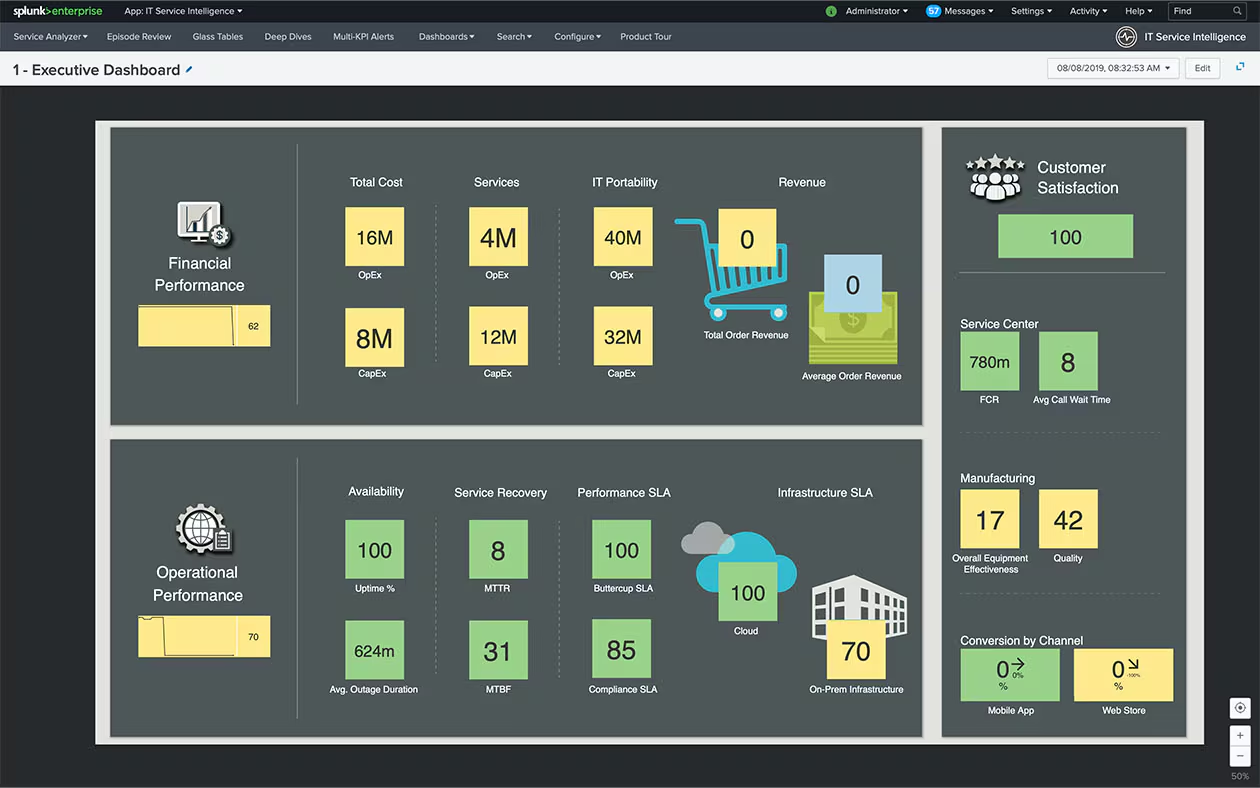
Some IT reports on metrics and analytics are scarcely useful anywhere outside the IT department. The role of ITOM is to bring the technical and business sides of IT together and ensure that reports and dashboards expand to demonstrate impact on the business’s bottom line. For example, organizations can adjust reporting to be specific to ROI and revenue, allowing the team to showcase its direct impact on the business while giving it a better chance of winning more budget resources.
Challenges associated with ITOM
ITOM, despite its usefulness in IT operations, faces numerous challenges in today's technological landscape. The challenges can be surmounted with a combination of strategic planning and effective management policies. Some of the challenges are as follows:
- IT Environment Complexity: The proliferation of multi-cloud and hybrid environments makes it challenging to manage and monitor diverse IT infrastructures. Problems also arise when integrating legacy systems with modern technologies.
- Security Threats: Cyberattacks are a threat. Protecting IT infrastructure from attacks is difficult because of evolving attack methods.
- Integration and Automation: Integrating various IT tools and systems can be time-consuming and error-prone.
- Technological Advancement: Keeping up with emerging technologies like IoT can be overwhelming, and the skills to manage these technologies can be challenging.
- Change Management: Overcoming change resistance by employees is challenging.
The future of ITOM
As companies increasingly adopt automation and as IT staff are redirected to perform more sophisticated tasks, ITOM will be critical to IT operations, from maintenance to optimization. Automating ITOM for repetitive tasks, for example, can help mitigate inconsistencies, errors, and other issues that occur with manual processes.
Also, because ITOM’s automation-based operations enable visibility and reach into other IT management processes such as ITAM and ITSM, IT professionals will focus on more complex, higher-value tasks.
ITOM automation will also continue to help organizations monitor alerts and initiate required security protocols when intruders enter the network or data center, when cyber threats arise, and/or when a server shuts down. To that end, AI collects operations data conveyed on dashboards and forecasts reports, allowing organizations to garner insights and make informed decisions to prevent future occurrences.
ITOM is poised to play a significant role in supporting and monitoring CI/CD pipelines, which will ensure new features are deployed efficiently and reliably, as well as adapt to the increasing complexity of multi-cloud and hybrid environments.
Wrapping up: ITOM will future-proof your IT operations
Transforming IT Ops for the future begins with insight into your entire IT infrastructure. ITOM best practices can instantly improve the value of your organization’s IT services. They can optimize IT processes to maximize the business value of the IT services you provide to your organization and enable your IT team to monitor and improve the health of your IT functions.
FAQs about IT Operations Management (ITOM)
Related Articles

SRE Metrics: Core SRE Components, the Four Golden Signals & SRE KPIs

What Is a Watering Hole Attack? Detection and Prevention

Key Management in Cryptography: A Complete Introduction

What Is Machine Data? A Complete Intro To Machine Data, For Humans

What Is a Data Platform? A Complete Introduction
What Is DNS? Domain Name Service, Explained

LLMs vs. SLMs: The Differences in Large & Small Language Models

How Logging Works in Kubernetes: Challenges, Approaches, and Solutions for K8s Logging