What is Ethical Hacking?
Companies are under more threat than ever. The rise in cyber threats is alarming: 2021 saw a 30% increase in cyberattacks compared with 2020. Even sophisticated systems with complex countermeasure technologies for security may be vulnerable to attack.
Many organizations turn to hackers to counteract these threats. Ethical hackers use the tools and methods of malicious actors to help companies pinpoint their weaknesses and build a more resilient and secure system. They seek out vulnerabilities and blind spots in system security and show businesses what would happen if these holes were exploited.
Here is what you need to know about ethical hacking, including what it is, how it benefits companies and its limitations.
What is ethical hacking?
Ethical hacking is an authorized attempt to get unauthorized access to an application, data, or computer system. Sometimes referred to as “white hat,” ethical hacking uses the strategies and actions of malicious attackers to find vulnerabilities that could be exploited. In essence, these cybersecurity professionals hack the hackers and get ahead of bad actors to identify security weaknesses.
Ethical hackers are security experts that use the latest technology and techniques to assess security. They play a vital role in the cybersecurity industry. They have the experience, knowledge and skills to test systems for issues and help organizations improve security measures. By working proactively, they help improve organizational and asset security and contribute to overall cyber threat intelligence.
(A good place to start? Common vulnerabilities and exposures.)
Principles of ethical hacking
Ethical hacking follows four critical protocols:
- Obtain legal approval. Proper authorization is critical before attempting access and executing a security assessment.
- Agree on scope. Determine and agree on the scope of the evaluation before trying to remain within the organization’s permitted boundaries.
- Notify of vulnerabilities. After the assessment, report all vulnerabilities discovered and offer remediation advice to resolve them.
- Honor data sensitivity. Many ethical hackers sign non-disclosure agreements along with the other terms and conditions required by organizations.
Ethical hackers are different from typical malicious hackers because they operate under set conditions and have pre-authorization. Instead of exploiting weaknesses, they report them to the organization to help them strengthen their overall system.
Benefits of ethical hacking
The most central benefit of ethical hacking is preventing data compromise and misuse by malicious attackers. Some of its top benefits include:
- Discovering vulnerabilities by taking the attacker’s perspective to fix weak points.
- Implementing secure networks that block potential security breaches.
- Protecting networks through the use of real-world assessments.
- Improving customer and investor trust by securing their data and products.
Because ethical hackers' primary goal is improving security, they don’t stop with lawful hacking — ethical hackers also help organizations correct their problems and strengthen their security.
(Read our data encryption intro.)
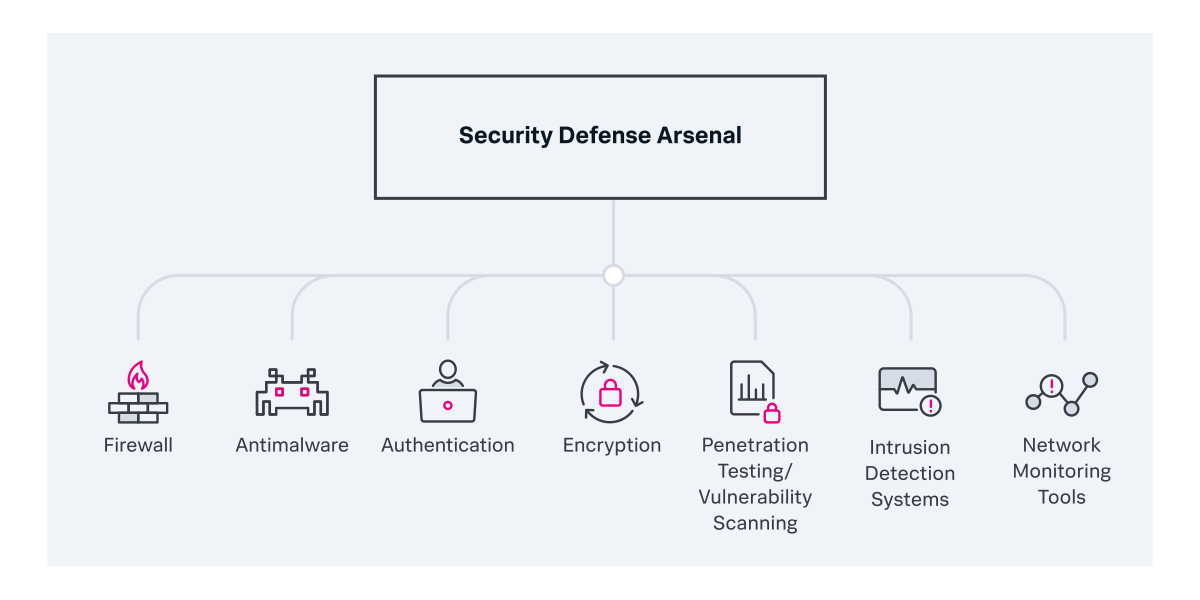
Problems that hacking can identify
Because ethical hackers simulate a malicious attack, they find and identify any attack vectors against a system. The first goal is to survey and explore, which allows them to gain the maximum amount of information.
Leveraging both automated and manual testing, they can perform an assessment. After they have gotten enough information, they use it to find their target’s vulnerabilities. Once they’ve uncovered the vulnerabilities, they exploit them to demonstrate how a malicious hacker could compromise their system.
Ethical hackers identify and uncover many of the common vulnerabilities that organizations have:
- Broken authentication
- Components with known vulnerabilities
- Sensitive data exposure
- Security misconfiguration
- Injection attacks
Ethical hackers put together a detailed report once they’ve completed their assessment and testing. The report will include the vulnerabilities they found and provide practical steps to patch and mitigate them.
Ethical hacker skills & certifications
As a technology career, ethical hacking requires specific skills and cybersecurity certification to break into the field and demonstrate expertise. Most ethical hacking roles require a bachelor’s degree in a technology or cybersecurity-related field, such as information technology. However, many employers are open to candidates without degrees as long as they have experience and certifications.
Ethical hacking requires a working knowledge of specific infrastructure technology, such as Cisco network controls, Linux servers, Microsoft Exchange and Citrix. It also requires an understanding of multiple programming languages and experience with computer programming.
Certifications that are critical in addition to experience and degrees. Some of the top cybersecurity certifications for ethical hacking include:
- Certified Information Systems Security Professional (CISSP) is a more advanced exam that tests skills in information security. It also prepares individuals for enterprise environments.
- Global Information Assurance Certification (GIAC) Penetration Tester is offered by one of the first organizations to offer cybersecurity education. GIAC has several vendor-neutral certifications that provide both instruction and hands-on learning. Penetration testing is a good discipline for starting out.
- Ethical Hacking Practitioner is a certification provided by the SECO Institute that demonstrates a mastery of ethical hacking techniques.
- Certified Ethical Hacking (CEH) is the broadest certification option, testing baseline knowledge of ethical hacking, including security threats, risks and countermeasures. However, some security pros caution that this entry-level certificate might not be as valuable as it seems.
Effective ethical hacking requires strong analytical skills to examine data and pinpoint potential issues. That means professionals need creative problem-solving skills, attention to detail, and continued education on the latest industry recommendations and penetration software.
Limitations of ethical hacking
While a critical tool, ethical hacking is limited in its scope and abilities. It is most effective when used along with other security measures.
Because of the white-hat nature of ethical hacking, it has a limited scope. Ethical hackers cannot test beyond the pre-defined scope to attack successfully. Experts also face resource and time constraints that malicious actors may not have. Budget and computing power may limit ethical hackers, but malicious hackers may have everything they need to attack.
Ethical hackers are also limited based on the methods of the organizations. Leaders may require that experts avoid specific test cases that may crash their servers, such as Denial of Service (DoS) attacks. That means that organizations may still be vulnerable even after testing.
Get in front of malicious hackers
Ethical hackers are critical for getting into the minds and methods of malicious actors. They have the tools, expertise, and processes to identify weaknesses and provide organizations with the practical tools they need to improve their security measures.
In a time where organizations are more vulnerable than ever and cyber threats have become sophisticated, an ethical hacker is a valuable asset to enhance security.
FAQs about Ethical Hacking
Related Articles

How to Use LLMs for Log File Analysis: Examples, Workflows, and Best Practices

Beyond Deepfakes: Why Digital Provenance is Critical Now

The Best IT/Tech Conferences & Events of 2026

The Best Artificial Intelligence Conferences & Events of 2026

The Best Blockchain & Crypto Conferences in 2026

Log Analytics: How To Turn Log Data into Actionable Insights

The Best Security Conferences & Events 2026

Top Ransomware Attack Types in 2026 and How to Defend