Best DevOps Books: The Definitive List
The DevOps movement has shifted the IT landscape over the past decade, becoming the de facto standard for software development and operations in many organizations. A recent State of DevOps survey, in fact, shows that DevOps is considered the #1 most critical IT process or framework – remarkable considering the phrase “DevOps” only began to appear in the late 2000s era. DevOps surpassed older frameworks like ITIL in the mid 2010’s in search interest and widespread industry acceptance.
The widespread growth of DevOps has happened, in large part, due to certain authors and books that have been published in support of the movement. There are now thousands of books covering all imaginable DevOps topics - just take a look at an Amazon search! In addition to a basic Amazon search, using Google Books Ngram Viewer we’re able to see there has been sustained and continued growth in use of the phrase “DevOps” in printed material since the word first appeared around 2008.
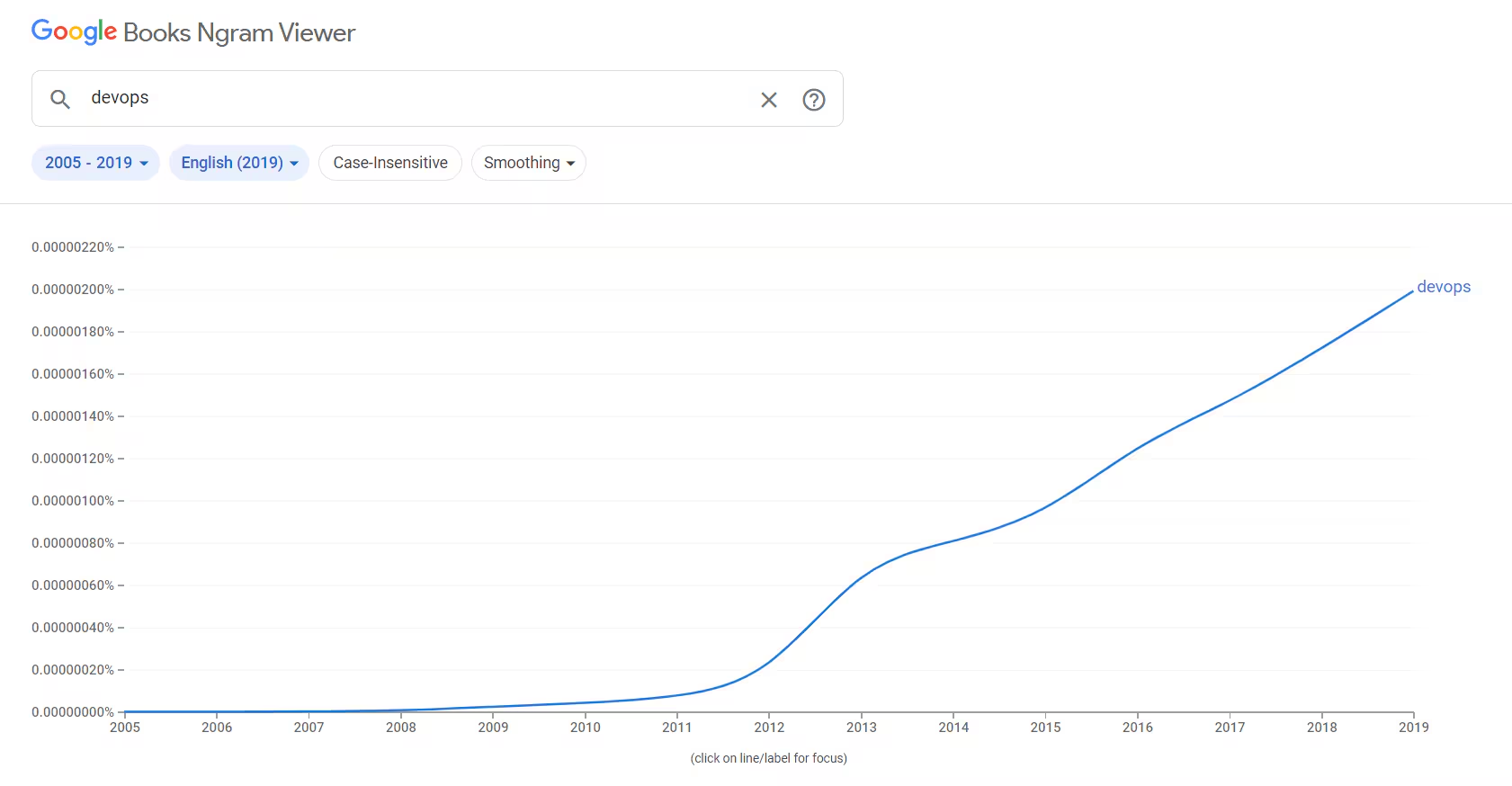
In this blog post we’ll look at the core, fundamental books that have played the largest role in creating the modern DevOps movement and influenced a generation of software developers to break down silos and continuously deliver and improve their digital services. If you want to learn about DevOps, in addition to attending DevOps Conferences and Events and reading blog post about the topics, it’s important to read the books that have inspired and continue to inspire the movement.
The Phoenix Project: A Novel About IT, DevOps, and Helping Your Business Win
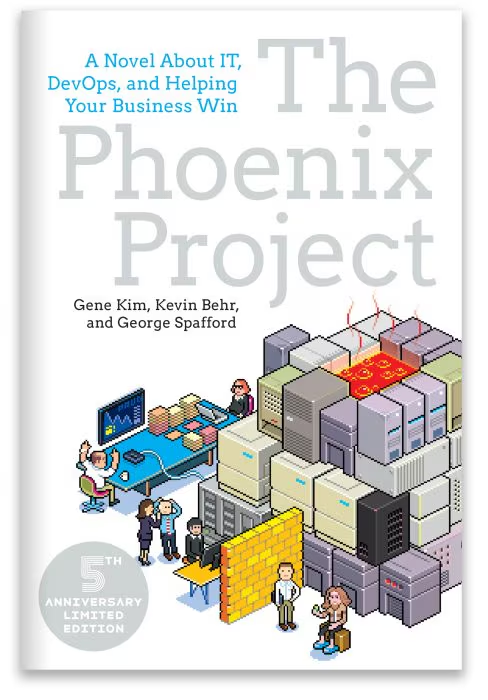
Authors: Gene Kim, Kevin Behr, George Spafford
Publisher: IT Revolution Press; 5th Anniversary edition (February 27, 2018)
ISBN: 978-1942788294
Website: https://itrevolution.com/the-phoenix-project/
Perhaps the most influential DevOps book of all time, The Phoenix Project is a novel about Bill an IT Manager at a company called Parts Unlimited. Bill has been given the opportunity to lead a project critical to the future of the business known as “The Phoenix Project”. The project is behind schedule and over budget, and Bill has just 90 days to turn the project around. Relying on a mysterious “philosophy of The Three Ways”, Bill starts to figure out how to organize and streamline communications, breakdown silos, and deliver the project.
This is a brilliant book at the top of the must-read list for any IT professional, but especially leaders in IT organizations. It is an engaging, fun read and not bogged down in technical details.
The DevOps Handbook: How to Create World-Class Agility, Reliability, and Security in Technology Organizations
Authors: Gene Kim, Jez Humble, Patrick Debois, and John Willis
Publisher: IT Revolution Press; Illustrated edition (October 6, 2016)
ISBN: 978-1942788003
Website: https://itrevolution.com/the-devops-handbook/
While the Phoenix Project is perfect for setting the state for the DevOps movement, the DevOps Handbook is the perfect book for the practical application of DevOps principles. In this book, written by expert DevOps teachers and practitioners, readers can find case studies, stories from major corporations, research, tools, and other resources to implement DevOps in an organization.
This book is perfect for IT leaders who understand the importance of a DevOps approach but might not know where to start or how to apply the principles of “The Three Ways” philosophy.
Continuous Delivery: Reliable Software Releases through Build, Test, and Deployment Automation
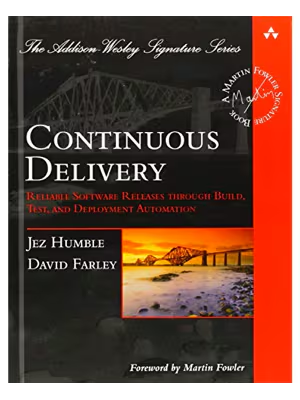
Authors: Jez Humble and David Farley
Publisher: Addison-Wesley Professional; 1st edition (July 27, 2010)
ISBN: 978-0321601919
Website: https://www.oreilly.com/library/view/continuous-delivery-reliable/9780321670250/
Including a forward from the influential Martin Fowler, Continuous Delivery is a technical and philosophical guide to deploying software more frequently while reducing risk and eliminating tedious work. The principles and best practices in this book are fundamental to continuous integration. The book includes precise step-by-step release process guidelines.
The Unicorn Project: A Novel About Developers, Digital Disruption, and Thriving in the Age of Data
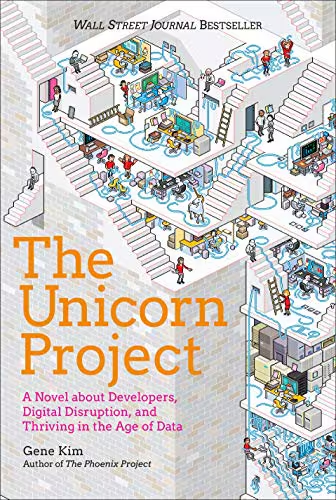
Author: Gene Kim
Publisher: IT Revolution Press (November 26, 2019)
ISBN: 978-0321601919
Website: https://itrevolution.com/the-unicorn-project/
Another novel from Gene Kim, the Unicorn Project teaches the reader about “The Five Ideals” – a follow-up from the “Three Ways” first described in The Phoenix Project. The Five Ideals include: Locality and Simplicity; Focus, Flow and Joy; Improvement of Daily Work; Psychological Safety; and Focus on the Customer.
In this engaging novel, we read about Maxine – a senior lead developer and architect – who has been removed from the Phoenix Project due to contributing to a payroll outage. While navigating the bureaucracy around her, where nothing can get done without endless paperwork, approvals, and committees, Maxine learns about rebel developers and business leaders who are working together to help the organization thrive despite the environment around them.
Accelerate: The Science of Lean Software and DevOps
Authors: Nicole Forsgren, Jez Humble, and Gene Kim
Publisher: IT Revolution Press; 1st edition (March 27, 2018)
ISBN: 978-1942788331
Website: https://itrevolution.com/accelerate-book/
The final book in our list of must-read DevOps books, Accelerate is based in part on four years of research in the Puppet State of DevOps reports. This book teaches how to measure team performance and how to determine what capabilities to invest in to improve performance. Rather than focusing on maturity of practice, this book highlights that the key to successful change is “measuring and understanding the right things with a focus on capabilities”.
Accelerate helps to complete the DevOps picture from a manager and architect’s point of view – and helps the reader focus not just on what works but on what to ignore. If your team has implemented many DevOps best practices, and are still not seeing the expected results, then this book might be the key to unlocking DevOps value for our organization.
Wrapping Up
While newer resources might be helpful, these foundational books that have helped to launch the DevOps revolution are critical reading to get a complete understanding of the why and how of DevOps. Do you have anther book you think should be required reading for DevOps professionals? Send me an email to let me know about it at swatts@splunk.com.
Happy reading!
FAQs about Best DevOps Books
Related Articles

How to Use LLMs for Log File Analysis: Examples, Workflows, and Best Practices

Beyond Deepfakes: Why Digital Provenance is Critical Now

The Best IT/Tech Conferences & Events of 2026

The Best Artificial Intelligence Conferences & Events of 2026

The Best Blockchain & Crypto Conferences in 2026

Log Analytics: How To Turn Log Data into Actionable Insights

The Best Security Conferences & Events 2026

Top Ransomware Attack Types in 2026 and How to Defend