Deep Packet Inspection (DPI) Explained: OSI Layers, Real-World Applications & Ethical Considerations
Learn Muhammad RazaIn our interconnected digital world, understanding and managing network traffic is crucial for security and performance. One powerful technique used for this is Deep Packet Inspection (DPI).
What is deep packet inspection?
An advanced network filtering method, deep packet inspection (DPI) examines the actual content (“payload”) of data packets traveling through a network checkpoint, not just the basic addressing information.
Conventional packet analysis typically only looks at the metadata in a data packet's header — like TCP/IP protocol details and routing IP addresses.
Deep Packet Inspection, however, goes much deeper, analyzing the data itself for security threats, policy compliance, or traffic optimization. This capability is vital for identifying sophisticated threats and managing network resources effectively, though it also brings important considerations around privacy.
The DPI difference: Conventional packet inspection vs. deep packet inspection
Think of conventional packet inspection as judging a book by its cover. You can see the title, author, and other metadata to get an idea of its contents and decide if it should be allowed. Deep Packet Inspection, on the other hand, is like reading the entire book, page by page, to thoroughly understand its content and check for any information that might violate specific filtering rules.
Conventional packet inspection
Traditional packet inspection primarily operates at the lower layers of the OSI model — typically Layer 3 network layer and Layer 4 transport layer — and focuses on packet headers.
-
Information Inspected: Includes IP addresses, port numbers, protocol types (e.g., TCP, UDP), and packet flags. The header provides information about what kind of data the packet carries, how it should be processed, its state, and flow direction.
-
Types of Conventional Inspection:
- Stateless packet inspection: This method uses basic firewall rules and analyzes each data packet in isolation, without memory of previous packets. It can enforce simple rules, like blocking all incoming traffic to port 22 (SSH). However, it may fail to detect attacks that span multiple packets, such as those used in TCP session hijacking.
- Stateful packet inspection: This more advanced conventional method holds information about entire sessions. It applies firewall rules and Network Address Translation (NAT) filtering to track connections and their states. By evaluating packet connection states and flow information, it can determine if a security policy applies to all packets within the same session. For example, it might allow traffic from a single user-initiated session but block additional, unsolicited traffic to the same port.
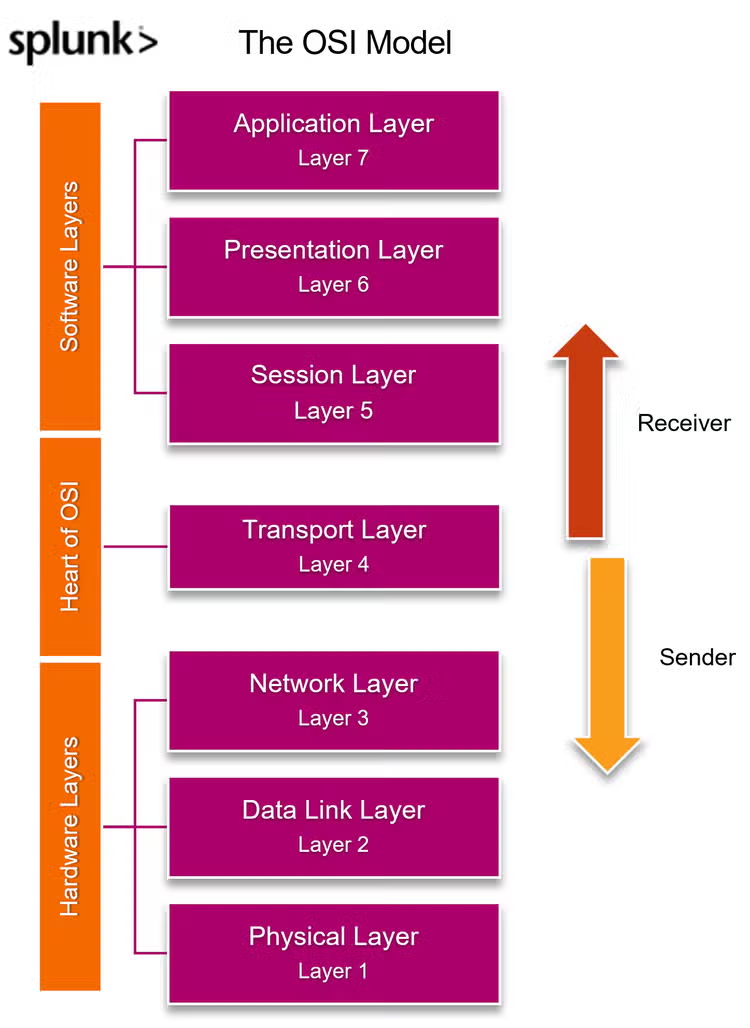
The OSI Model for how different computer systems communicate with one another
Deep packet inspection (DPI)
Deep Packet Inspection provides a much more granular and comprehensive analysis by examining data across multiple OSI layers, including the application layer where the actual data payload resides. Unlike conventional analysis, DPI can extend from Layer 3 all the way up through layer 7.
Detailed layer-by-layer analysis:
-
Layer 3 (Network layer): Analyzes IP addresses and location information of the sender and recipient.
-
Layer 4 (Transport layer): Examines TCP/IP protocols, TCP/UDP ports, packet flags, and connection state. DPI evaluates the route of the network traffic.
-
Layer 5 (Session layer): Analyzes session initiation and termination. It monitors sessions for anomalous behavior and correlates session data with content from Layer 7. Policies such as Quality of Service (QoS), user restrictions, traffic blocks, and permissions are often enforced here.
-
Layer 6 (Presentation layer): Detects and decompresses protocol information for further analysis. It interprets metadata encoding to identify file names and messages. Lawful inspection at this layer may involve decrypting payload data — a process that can resemble a Man-in-the-Middle (MITM) intervention if the data was encrypted at the source. If data remains encrypted, DPI might use TLS data and digital certificates to evaluate domains and services related to the transmitted data.
-
Layer 7 (Application layer): This is where the actual payload and application-specific protocols are found. Essentially, both the payload content and packet header protocols are thoroughly analyzed and filtered at this layer. This allows DPI to understand the actual application being used and the content itself, not just the data's path. DPI can analyze:
- HTTP protocol: To block access to specific websites or extract search queries.
- DNS protocol: To inspect queries and responses.
- VoIP data: To enforce QoS thresholds.
- Specific application signatures: To block traffic based on protocol behaviors from services like BitTorrent or TOR.
(Related reading: DNS security.)
Deep packet inspection: Key applications & capabilities
DPI can be used for several important activities.
Advanced security
DPI can be used to enforce specific security and regulatory policies, including:
- Sophisticated content filtering
- Malware detection (Identifying malicious code within packets)
- Data intrusion/breach detection (Spotting unauthorized data leaving the network)
Real-time analysis
Unlike conventional methods that may rely on static rules, DPI often employs advanced analytics and machine learning algorithms to analyze information in real-time.
Broad enforcement
DPI offers significantly higher security coverage. It's often implemented at ISP gateways or by cloud service providers for regional or widespread policy enforcement, impacting all internet users. Private networks also use DPI for internal monitoring and protection.
The DPI debate: Privacy vs. security
The powerful capabilities of Deep Packet Inspection lead to a long-standing debate concerning privacy versus security. The core issue is balancing the need for protection against ever-evolving cyber threats with an individual's right to privacy and control over their personal information.
Governments, human rights organizations, and security researchers present strong arguments on both sides. While DPI is a critical tool for identifying and mitigating serious security risks — from malware to data exfiltration — its ability to inspect the content of communications raises legitimate privacy concerns.
Many business organizations address these concerns by using strong end-to-end encryption protocols for all data transmitted to and from their private virtual networks, making the payload unreadable even if subjected to DPI by external parties.
The power and responsibility of DPI
Deep Packet Inspection is a sophisticated and powerful technology essential for modern network management and cybersecurity. By providing in-depth visibility into network traffic content, DPI enables organizations and service providers to:
- Detect advanced threats.
- Enforce critical policies.
- Optimize network performance in ways that conventional packet inspection cannot.
However, its capability to examine private data necessitates careful consideration of privacy implications and responsible implementation. As network traffic continues to grow in volume and complexity, DPI will likely remain a critical — and debated — component of our digital infrastructure.
FAQs about Deep Packet Inspection (DPI)
Related Articles

The Digital Resilience Guide: 7 Steps To Building Digital Resilience

Disaster Recovery Planning: Getting Started