Retail in the Era of AI: An Industry Take on Splunk’s 2024 Predictions
Macro technology trends have always impacted and influenced every aspect of the retail industry. From the days of catalog ordering and cash only transactions to today’s personalized, always-on omnichannel experiences where contactless payment has become the norm - the world of retail is almost unrecognizable. While the core building blocks of the industry have stayed more or less the same, the experiences being delivered, the role of the associate and the expectations of the consumer have drastically evolved. And yet again, change is upon us as we embark on the era of AI.
Retail Leaders Prepare for Our AI Future
For retail business leaders, AI has quickly become a leading topic in the boardroom as they develop their playbooks for the coming years. For some, it’s all about efficiency and productivity gains. For others, it’s about differentiating the experiences they deliver and finding new ways to disrupt modern business models. Retailers are only scratching the surface of what AI and machine learning can do for their business and customers alike. The industry is just getting started.
In a recent study, Google Cloud reported that a survey shows 81% of retail decision makers feel urgency to adopt generative AI in their business. While the use cases are endless, decision makers have centered around a handful of areas where they believe deploying AI will have the biggest impact in the coming year. Supply chain optimization, customer service automation, store labor efficiencies, fraud protection and personalized experiences have been recurring themes in these discussions, but one topic has been front and center - business resilience. Leaders both inside and outside of IT recognize the rise of new threats and the critical importance of systems that keep the business running which has led to resilience being a non-negotiable priority.
AI Reshapes the Face of Retail Cybersecurity and Fraud
The retail ecosystem is complex, highly distributed and spans many channels to get the right products to the right customers. This diverse landscape introduces a number of unique attack surfaces in which AI may unfortunately expand upon with bad actors potentially knocking at the doors of retailers. With more threats comes more demand to mature the security posture of the organization and introduce new AI tools that will supplement security workforces by taking on repetitive and labor intensive tasks.
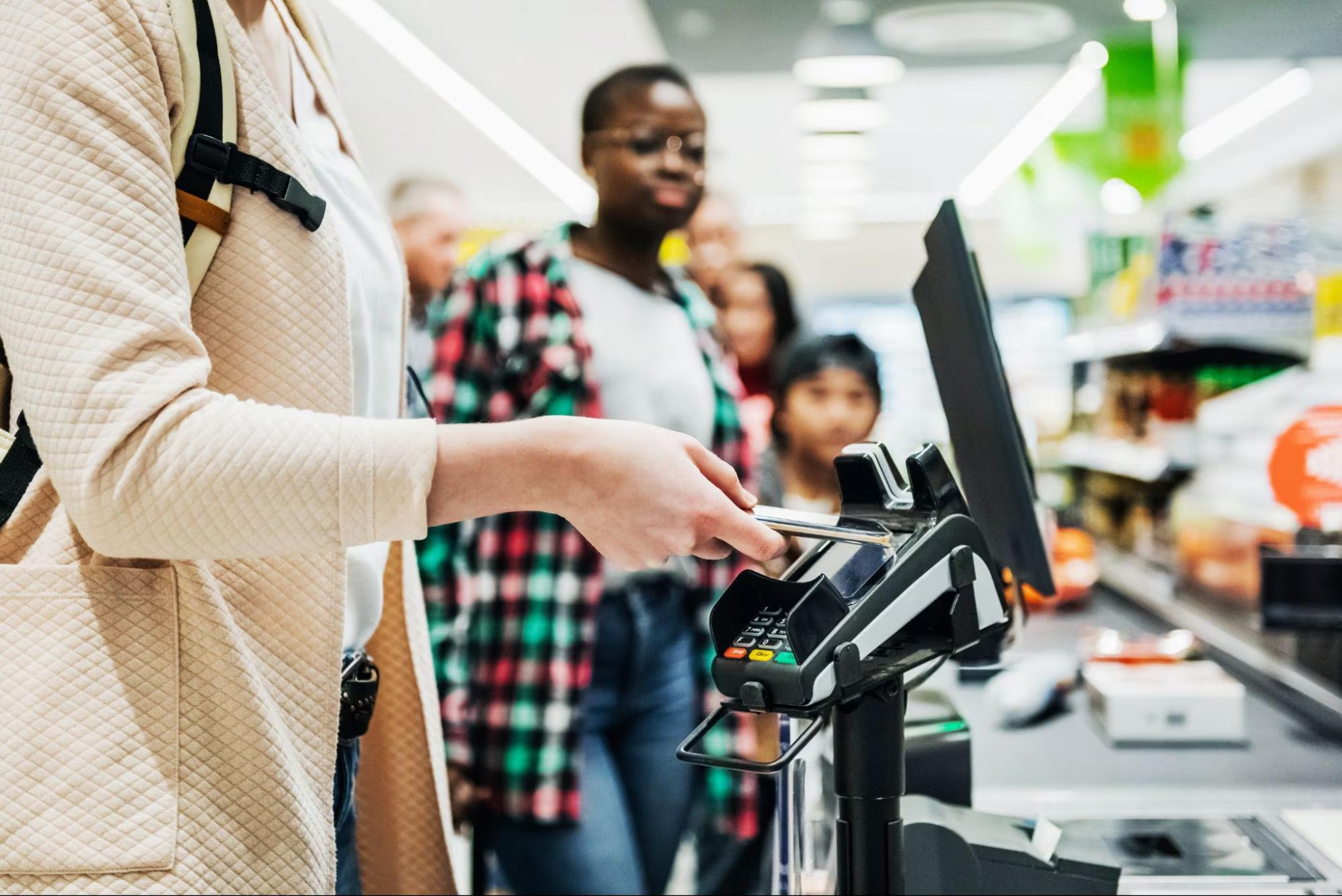
Lastly, it would be a miss to not mention ransomware and the significant cost the retail industry will sadly incur for the foreseeable future. In a recent survey of more that 1,000 retail IT decision makers, 54% disclosed that they were targeted by ransomware in the last 12 months. Two in three respondents from the survey shared that they are not very confident in their ability to recover all lost data in the event of a ransomware attack. These results show that retailers at large are not ready for ransomware attacks as attackers shift focus to zero day threats where there is no known patch for newly found security vulnerabilities. It’s clear that more rigorous and punitive laws around ransomware coupled with new cybersecurity legislation can’t come fast enough to aid retail security professionals in their defenses against bad actors who are weaponizing AI.
The AI Revolution Intersects With Retail IT
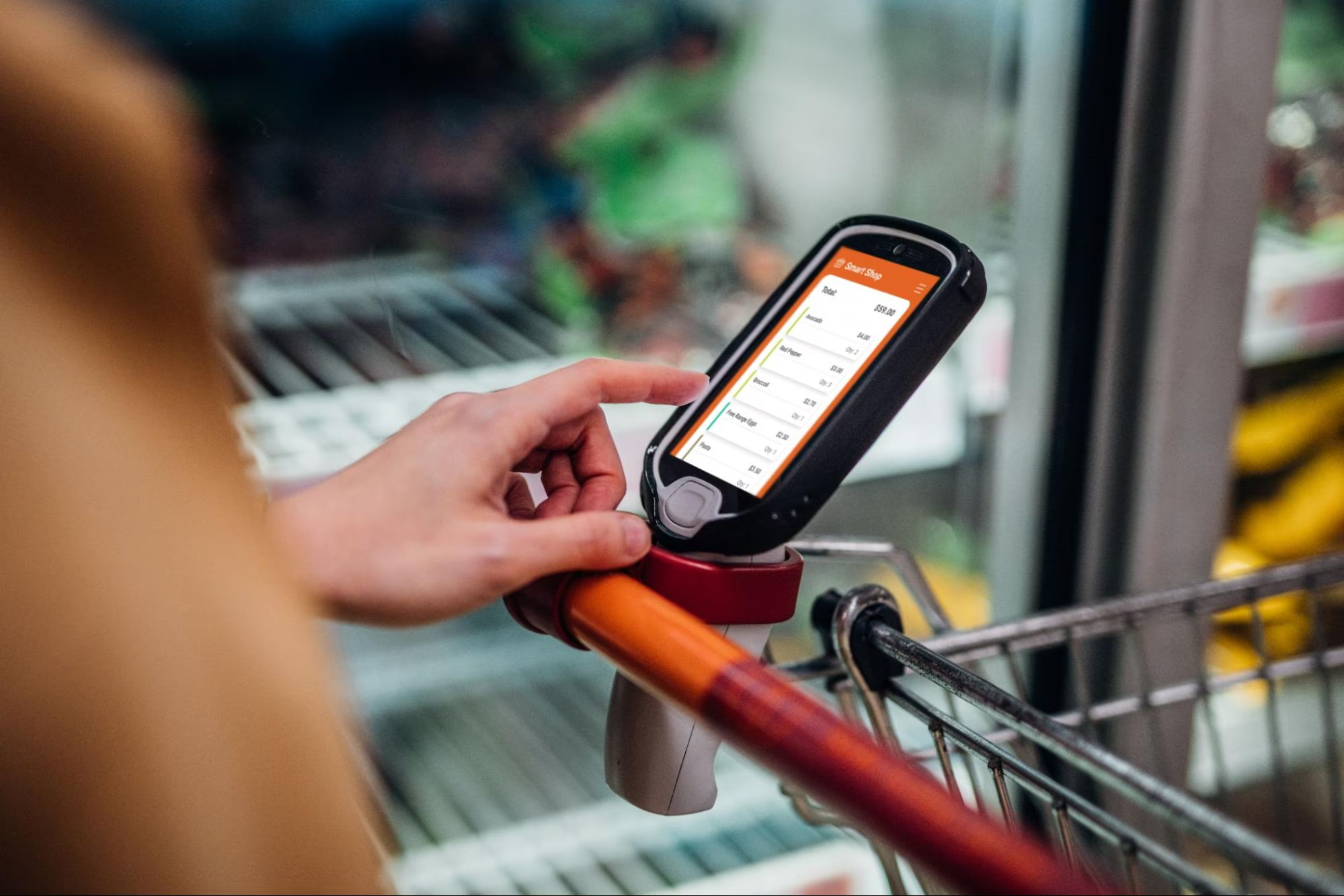
Retailers are evolving to innovate across every front and exceed customer expectations. Stores are being modernized, personalized omnichannel journeys are enabling diverse customer preferences and the rise of organized retail crime coupled with new security threats are all putting more pressure on the C-Suite.
It’s clear that the retail innovation happening around us demands digital resilience. Retailers are investing in strategies and governance models to ensure that new technologies work seamlessly, 24/7/365. And, it’s never been a better time to design AI investments into the core retailing strategies for exponential growth.
When consolidating monitoring tools under one strategic observability practice, retail organizations are able to better minimize downtime and elevate the customer experience to drive greater loyalty. New complexities in applications and architectures are opening the doors to AI, automation and OpenTelemetry — an open source, vendor-agnostic observability framework for collecting telemetry data. Having a future-proofed telemetry strategy is becoming essential for retailers that are looking to create value from new and untapped data sources while maintaining long term compatibility. Retailers with physical locations are focused on attaining comprehensive visibility while safeguarding store systems — including point of sale, store infrastructure, merchandising applications, kiosks and digital services — to get the right products at the right prices into consumers' hands while protecting against threats or disruptions. With the right visibility in a single platform, predictive analytics and automation can avoid an outage or unsatisfactory experience altogether.
Many retailers and quick service restaurants have shared plans to invest in edge computing in 2024. Distributed physical stores have always created a data rich edge environment that retailers struggle to make sense of. There are often hidden treasures waiting to be unlocked in the data that flows from point of sale registers to customer devices and guest wifi to IoT experiences and beyond. Every interaction and every transaction creates a data stream full of new insights and telemetry that retailers can take action on to drive revenue and keep customers coming back for more. However, edge computing introduces new attack surfaces and security challenges for a retailer as well. Staying ahead of the threats and properly identifying challenges as they occur can be achieved by enabling more sophisticated instrumentation and security intelligence across edge environments.
Resilience for the future starts today as retailers around the world establish their playbooks for the years to come. Are you ready for 2024? We are. Download all three Splunk Predictions Reports today.
Related Articles
Splunk Wins Third Ever NAVWAR Enterprise Artificial Intelligence Prize Challenge for Exceptional SOAR Capabilities

Congress Should Support Cybersecurity Through Log Standardization Funding

Reducing the Carbon Footprint of the Manufacturing Industry with the Power of Data

What is Splunk? – A Summary for UK Public Sector

The Path to Innovation for Public Sector Is Through Data
OMB Mandates Agency Log Standardization to Improve Security

Splunk Deepens Commitment to Public Sector with U.S. Defense Information Systems Agency IL5 Provisional Authorization

Splunk Welcomes the Formation of the Joint Cyber Defense Collaborative