Community Spotlight: Data, Dashboards and Rally Cars with John Owen
Customers & Community Kara DoucetteKey takeaways
- Splunk Community leader John Owen shares how hands-on learning, curiosity, and strong communication skills can help people build successful careers in security and data analytics.
- He highlights how Splunk can solve problems beyond cybersecurity, including creative real-time uses like pulling live telemetry from a rally car into dashboards.
- Owen says the Splunk Community, from user groups to online forums, is one of the best ways to learn faster, solve real-world challenges, and connect with experts.
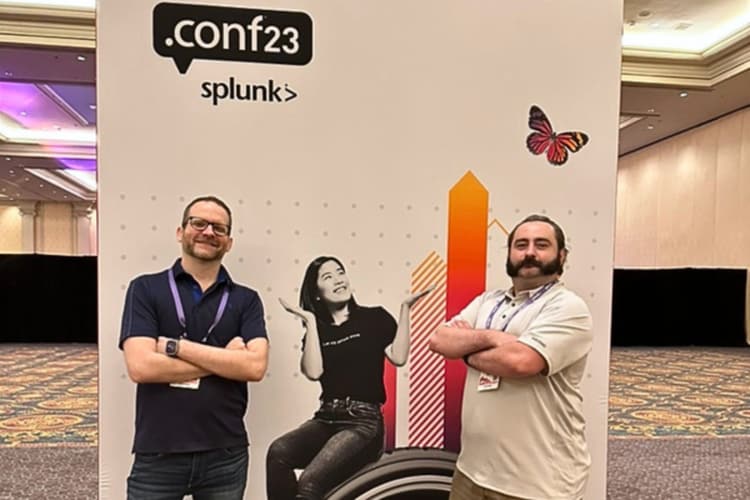
Building on the momentum of our Community Spotlight series, we are excited to feature another standout member who embodies the collaborative spirit of the Splunk Community. Meet John Owen, the Director of Security & Data Analytics at Fulcrum Technology Solutions and a dedicated Splunk User Group Leader of our Denver and Houston chapters. Whether he’s architecting complex security solutions or strapping a Splunk Edge Hub into a rally car for real-time telemetry, John is constantly pushing the boundaries of what’s possible with data.
Join us as we sit down with John to discuss his journey, his unique approach to problem-solving, and why he believes the community is the most valuable resource for any Splunk professional.
Your Work
What is your job title and how do you use Splunk in your role?
As the Director of Security & Data Analytics at Fulcrum Technology Solutions, I lead a professional services team specializing in security analytics, SIEM, SOAR, and data engineering. I stay hands-on: evaluating new Splunk capabilities as they roll out, architecting solutions for clients, and providing technical leadership throughout delivery.
Splunk is woven into most of what my team does, including SIEM implementations, detection engineering, custom app development, and data pipeline design. The problems vary, but Splunk is usually in the mix somewhere.
How did you get involved in this field of work?
I started out as a systems and network admin. As security started bleeding into everything, I naturally shifted toward securing the infrastructure I was already managing. The real turning point came when I was working for a government agency and we came under attack from Anonymous. I spent days — literally days — manually reviewing firewall logs trying to understand what was happening. It was miserable, and it made one thing crystal clear: you cannot do this job without visibility into your data.
When I eventually transitioned from a customer role into consulting, one of my first major assignments was a large Splunk support engagement. That cemented it. Security analytics became my focus, and I've been building on it ever since.
What advice would you give someone who is new to your field of work?
Second, take your soft skills as seriously as your technical skills. Being able to communicate clearly (especially translating technical concepts for non-technical audiences) is what separates good engineers from great consultants. You can be the most talented person in the room and still lose the room if you can't bring people along with you.
And finally, surround yourself with people who will have the hard conversation with you. I live by this: people who care about your future will tell you the uncomfortable truth. People who don't, won't. That goes both ways — be someone who can hear hard feedback and be someone willing to give it. The only way we grow is to identify our failures honestly and do something about them.
Working with Splunk
Are there any interesting use cases you’ve implemented using Splunk?
I 3D printed a case for a Splunk Edge Hub and strapped it into a rally car. We connected it to the vehicle and pulled live telemetry into Splunk dashboards that we could view on an iPad trackside in real time. It was a blast to build, but what made it genuinely interesting was the conversation it sparked about practical applications — things like analyzing weight transfer patterns to inform driver training and improvement. It's a good reminder that Splunk's use cases extend well beyond the SOC.
What are your top 2 Splunk hot tips?
First, engage with the community. Check out Splunk Answers, the Slack Community, and definitely attend a local or virtual user group meeting (we'd love to see you at ours). The answers to problems you haven't hit yet are already out there. Secondly, dig deep into Splunkbase. There are some real gems buried in there that most people never find because they stop looking after the first page of results.
What’s the most surprising thing Splunk AI has helped you uncover?
Connecting Claude to Splunk via MCP. Being able to point an LLM directly at your Splunk data and interact with it conversationally opens up use cases that would have taken significant custom development to replicate otherwise.
What’s one problem you hope Splunk AI will help solve next?
Dashboard creation. With both a time sink and a skill barrier, a lot of analysts know exactly what they want to see but struggle to build it efficiently. Dashboards are also critical for repeatability and making smart use of processing resources. If AI can take the friction out of that process, it puts better visibility in the hands of more people faster.
On Community:
Tell us about the Splunk User Group chapters you lead and what inspired you to become a User Group Leader.
I lead the Houston and Denver Splunk User Groups. The honest inspiration is pretty simple — I love sharing what I've learned, and I get just as much back in return. Splunk's ecosystem is incredibly diverse and flexible, and no single person or team has seen every use case. When you engage with the broader community, you get perspectives and approaches you never would have arrived at on your own. It consistently challenges the way I think about problems and pushes me to consider solutions I might have otherwise overlooked.
For someone nervous about attending their first local meetup, what’s one reason they should definitely show up?
I've been a card-carrying Splunk consultant for over a decade and I'm still learning something new almost every time I'm in a room with this community. Here's the thing about engineers — we're wired to solve problems independently. We'll spend hours digging through documentation before we'll ask for help. That instinct serves us well technically, but it can be isolating. A meetup is a low-stakes environment where everyone in the room already speaks your language. You don't have to perform or impress anyone. Show up, listen, ask one question, and I guarantee you'll leave with something you didn't walk in with.
Can you tell us about a positive experience you’ve had with the community?
Documentation only gets you so far. A lot of the other resources out there are sales-focused that try to sell you what the platform can do, not what it's actually like to implement it in a messy, real-world environment. The community gives you the unfiltered version. Real problems, real workarounds, real opinions from people who've already hit the wall you're currently staring at.
Life After Hours
Tell us about one of your hobbies or talents.
I'm an avid tinkerer — if there's something to take apart, build, or experiment with, I'm probably already into it. That covers everything from Meshtastic mesh networking and IoT/electronics projects to 3D printing and AI experimentation. I also work on my own car and play golf, but lately the thing that's really grabbed my attention is rally driving. I'm actively co-driving in the American Rally Association. Shout out to Rally Ready Driving School for helping make that happen.
What are you watching or reading right now?
Currently, my watch list consists of: High Potential, Jury Duty, and For All Mankind. I got into High Potential because I'm a massive It's Always Sunny in Philadelphia fan. I'm also a die-hard Top Gear UK fan who has seen every episode more times than I'd care to admit.
Would you like to give a shout-out to your hometown and one of your favorite local businesses there?
I grew up in Rockport, TX — a small coastal town on the Gulf that I'll always consider home. If you're ever there, you have to hit Benchwarmers/HUDAT and the Boiling Pot. I'm a sucker for good quality seafood, and those two are my first stops every time I make it back.
Want To Be Part of the Community?
The best way to get better at Splunk is to hang out with people who are doing it at the highest level. Whether you’re looking to solve a 'white whale' query on Splunk Answers, want to talk shop in real-time on Slack, or are looking for your local crew in a User Group, there’s a seat for you at the table.
Related Articles

Career Resilience and Splunk: Insights from the 2023 Splunk Career Impact Survey

The Data Abundance Paradox