Moving Beyond Constant War Rooms to Build Mature Observability Practices
CTO Stack Craig Robin Splunk Field CTOWe’ve glorified the ‘all-hands’ war room as the ultimate sign of teamwork, but let’s be real: it’s just a flashy, expensive symptom of fragmented operations. True power isn’t in fighting fires. It’s in building unified observability so you never have to.
From competing business to cyber threats, your organization needs to be ready at any moment. But does that mean you should keep your teams at DEFCON 1, living in a constant state of emergency? Absolutely not. That’s not sustainable and is a surefire way to burn out your best people and stall innovation. There’s a smarter path forward.
It’s time to fundamentally rethink how you pick your battles and mobilize your teams. This is where mature observability practices become your organization’s powerful ally.
With real-time, unified visibility into your systems, your data transforms from noise into actionable intelligence. That’s how you drive decisions that power innovation and put your customer experience on a winning trajectory.
But here’s the catch: without discipline, observability data can spiral out of control and devour resources. When the deluge of alerts start flooding in, organizations reflexively hit the panic button and scramble everyone into a war room. Splunk’s State of Observability: The Rise of a New Business Catalyst reveals that 20% of respondents often or always start a war room that includes members of multiple teams until an issue is resolved. That’s not teamwork — it’s organizational chaos. It’s a glaring sign that your systems inspire panic, not confidence.
So, what does it really take to improve incident response? What does a white flag look like in your always-on war rooms?
The real cost of constant incident-response war rooms
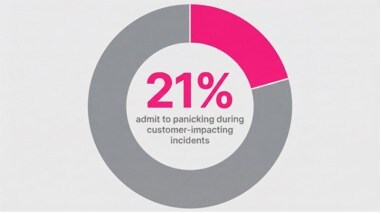
If you have worked in ITOps or engineering, you know how it goes. A flood of alerts triggers a frantic crisis response, and hours are lost managing the situation. This is not just about wasted time; it is lost innovation, delayed strategic projects, and a direct hit to your competitive edge. When 21% of our respondents admit to panicking during customer-impacting incidents, it's not just a statistic; it's a flashing red light indicating a profound lack of context and confidence. This uncertainty often triggers the reflex to pull everyone into a war room, leading to a cacophony of voices and delayed resolution.
This isn’t just a summary of sensational headlines. I’ve lived this nightmare firsthand at one of the world’s largest global brands. A critical consumer-facing service went down during peak hours, and within minutes, over 40 engineers and architects were crammed into a war room. The atmosphere was electric — not the group electricity that spurs innovation, the opposite, panicked kind.
We huddled around whiteboards, frantically sketching out our tangled web of architecture because no one had a complete picture of how everything connected. The room became a discordant orchestra of keyboard clicks as each team desperately queried their consoles, not just to find the root cause, but to prove their service wasn’t the culprit. Not that it’s helpful at any point, but playing the blame game is definitely not conducive to efficiently solving in a high-stress situation.
Meanwhile, the clock kept ticking, customers couldn't transact, and revenue bled away with every passing minute. What should have been a coordinated investigation devolved into defensive finger-pointing and duplicated effort. Hours later, when we finally isolated the issue buried three layers deep in a legacy integration no one remembered existed, significant damage had already been done. The post-mortem revealed the real failure: We’d built a system so complex it took 40 smart people in a room to understand it, and even then, we were drawing it from memory on a whiteboard.
Need more than my personal anecdote? Try this formula to quantify your total cost for a potential incident at your organization.
Here’s a simple calculation framework as an example:
Total Incident Cost = (Engineer Hours × Blended Hourly Rate) + Revenue Impact + Customer Trust Erosion
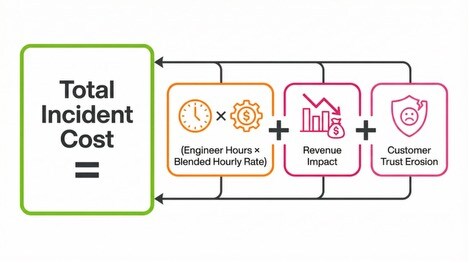
Using my real war room scenario: 40 engineers × 4 hours × $125/hour (average blended rate) = $20,000 in labor costs alone for a single incident. And that's just engineering time. This cost is compounded exponentially by the lost revenue streaming out the door every minute consumer-facing services stay down, plus the long-term damage to customer experience and brand trust that’s nearly impossible to quantify but absolutely real.
If you can work with finance to establish a blended hourly rate for engineering resources (my research suggests $110-$140/hour is typical for enterprise organizations), you can make this hit home with real numbers.
Use this potential total incident cost calculation as an eye opener for your organization’s exposure. It will help you build a stronger business case, justifying budget and resource allocation when you pitch changes to your board.
Incident response and security experts, not firefighters
Want out of the chaos? Attack the root: tool sprawl and the avalanche of false alerts it brings. Tool sprawl can be a strategic handicap that generates a deluge of false alerts that obscure genuine threats. In this environment, a unified view of observability and security data is the only way to remove the blindfold and gain clarity on your data. A centralized observability platform, leveraging AI-driven correlation and prioritization, allows for incident isolation. This transforms your responses into data-driven operations that speed root cause analysis and remediation.
Your people are your most valuable asset. Every minute spent herding experts is a minute stolen from your customers and your future. Left unchecked, this culture of firefighting breeds burnout, wastes resources, and slows innovation to a crawl. Break the cycle by correlating issues, finding root causes, and stop unnecessary fire drills. With unified, collaborative observability, your war room can morph from a chaos factory into a creativity engine.
Sharpening your incident response plan
The difference between chaos and control often comes down to preparation and process. Runbooks, response plans, and post-incident reviews aren’t just best practices — they’re your defensive line. Fifty-four percent of teams say they often or always develop a detailed response plan, while 71% conduct post-incident reviews to capture lessons learned. These practices ensure that when alert volume spikes, teams can respond methodically rather than emotionally.
Still, only 22% of organizations say they have mature observability and collaboration practice to isolate incidents to a specific team. Getting there takes three critical ingredients:
- Clear ownership: Every service or system needs a designated owner. Without explicit accountability, incidents get bounced around, slowing everything down and compounding the mess. Draw the lines. Make it clear who is in charge.
- Accurate telemetry: Teams can’t fix what they can’t see. You need high-fidelity data, including metrics, logs, and traces, so your engineers can laser in on the root cause, without dragging innocent bystanders into the fray.
- Shared context: Even when ownership is clear and telemetry is strong, siloed tools can create blind spots. When multiple teams use the same observability platform, everyone has access to consistent, correlated data, ensuring alignment and eliminating redundant investigation.
Alerts aren’t going anywhere. The challenge is making them actionable, at scale. That means dialing in on signal quality, not just turning down the noise. Correlate what matters, understand the business impact, and focus your attention where it counts. That’s how you drive down mean time to detect (MTTD), slash mean time to respond (MTTR), and empower engineers to do the work that moves the needle.
Teams, telemetry, and tooling for better outcomes
ITOps and security teams can’t afford to not work together. Each team possesses key intel, but only shared context ensures you’re all fighting the same battle. With true collaboration, teams enjoy a strong level of confidence knowing their incident attack plan has been put together using input and context from across teams — no missing pieces.
An integrated observability and security approach allows teams to solve the same problem in tandem. Using shared dashboards, both teams quickly identify true root causes and resolve in minutes instead of hours or days.
The data that backs this up:
- 64% of respondents who collaborate between observability and security report fewer incidents that affect customers
- 54% see improved data quality
- 54% say they waste less time chasing down issues
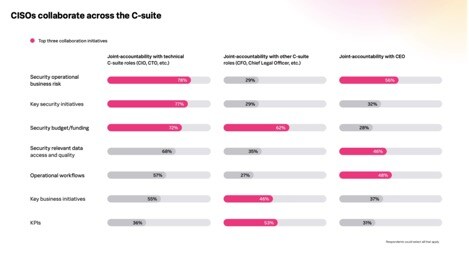
Mature observability practices account for the perpetual differences between security, ITOps, and engineering teams. How? Accurate triage. Instead of panicking and calling all hands on deck, a mature practice will first triage, then intelligently direct incidents to the right team as quickly as possible. Resolve issues efficiently by delivering the right data to the right people. That’s the best way to deal with business-impacting issues.
Collaboration by design is key
Collaboration isn’t accidental. It’s engineered. Seventy-four percent of respondents say their observability and security teams share and reuse data. Sixty-eight percent use the same tools. The leaders go further — they troubleshoot together, crack the case fast, and turn what used to be endless war rooms into swift, data-driven operations.
Ending the war room cycle isn’t about ditching collaboration. It’s about swapping reactive, high-stakes chaos for steady, proactive alignment.
Organizations that double down on ownership, observability, and cross-team unity don’t just resolve incidents — they prevent them. They protect their people from burnout, preserve customer trust, and unleash engineers to deliver real innovation.
The future is about trading frantic resource drains for productive clarity. Take control of your tools. Slash the sprawl, eliminate the excess, and stick with what works. Centralized dashboards don’t just clean up your stack — they give your teams a single, commanding vision. That’s how you smash silos and replace war room chaos with real, shared understanding. Instead of watching your teams burn out on the front lines, unite them to drive the business forward.
Learn more about mature, leading practices in State of Observability: The Rise of a New Business Catalyst.