A Collaborative Leap in AI: DSTA and Splunk Accelerate LLM-Chat Integration in DSDL
Artificial Intelligence Huaibo ZhaoWe are excited to announce a significant collaboration between Splunk and Singapore’s Defence Science and Technology Agency (DSTA)!
Through this partnership, DSTA’s innovative LLM-chat interface, which was developed to enhance user interaction with search results, will be officially integrated into the Splunk App for Data Science and Deep Learning (DSDL).
Introducing DSTA’s LLM-Chat Interface
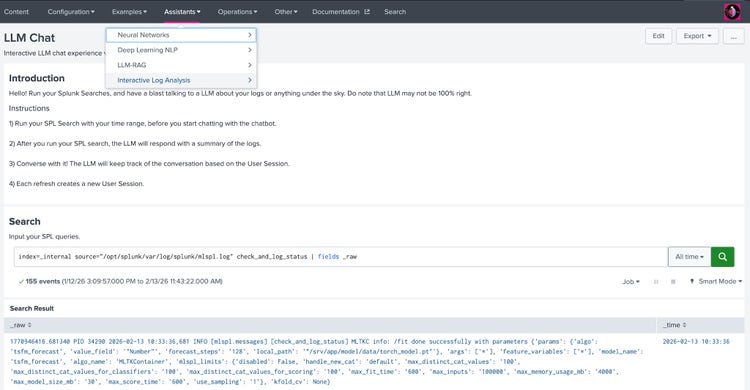
DSTA designed the LLM-chat interface as a powerful use case to help users analyze Splunk search results through an intuitive, interactive chat experience. The DSTA team developed both the interface and the backend connections, enabling users to query and interpret their data using natural language. This feature is especially valuable for on-premises users seeking to unlock tangible business outcomes from Generative AI within their own secure environments.
By accelerating insights discovery from large and complex data, improved operational efficiency, empowering teams of all technical backgrounds, ultimately drive better data-driven decisions that can unlock greater business outcomes, while maintaining full control over sensitive data.
The benefits and potentials of this use case were highlighted when DSTA presented in Splunk’s .conf25 in Boston and Splunk AI Day (for DSTA) in Singapore.
About Splunk DSDL
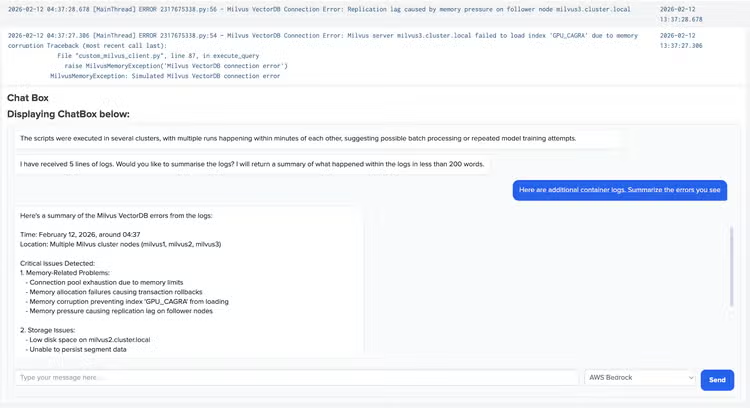
The Splunk App for Data Science and Deep Learning (DSDL) is an official Splunk solution designed to support custom Large Language Model (LLM) use cases for both on-prem and cloud deployments. DSDL offers an open-source container backend, providing customers with the flexibility to tailor AI solutions to their specific requirements and security constraints.
Bringing Powerful AI Tools to a Wider Audience
This collaboration marks an exciting milestone. With the successful integration of DSTA’s LLM-chat interface into Splunk DSDL and official support now in place, this innovative feature is ready and available to Splunk users worldwide. Users can now take advantage of seamless, interactive data analysis capabilities, harnessing the latest advancements in Generative AI, whether they operate in the cloud or on-premises.
We are thrilled to empower our global community with these new capabilities and look forward to witnessing the creative ways organizations will use interactive AI to unlock even more value from their data.
We invite you to explore these enhancements here and experience firsthand how this integration can transform your data analytics journey.
Acknowledgement
In partnership with Splunk Customer Success Team, we would like to extend our heartfelt appreciation to the DSTA team for their outstanding collaboration and technical expertise throughout this integration. Special thanks to DSTA’s Central Log Management System (CLMS) Team, Infocomm Infrastructure (ICI) Programme Centre for their dedication, innovation and commitment to excellence.
Your collective efforts have been instrumental in bringing this powerful LLM-chat interface to the Splunk DSDL community. Thank you for making this milestone possible!
Related Articles

Splunk Security Content for Threat Detection & Response: January Recap

State of Security Research Details Essential Strategies for the Year Ahead