What is Penetration Testing (Pen Testing)?
Learn Shanika WickramasingheToday, security is a top priority in every organization. This is a direct response to rapidly growing security threats powered by innovative, sophisticated techniques.
With this background, penetration testing is one practice organizations need: penetrating testing helps you to prepare and adapt to evolving security threats.
This article introduces penetration testing, describing its phases, types, and popular tools available on the market. We'll also look at the many benefits that penetration testing provides.
What is Penetration Testing?
A penetration test (aka “pen test”) is a type of security testing. Its goal is to see how far into your internal systems a hacker can penetrate — hence the name. Pen testing does this by simulating cyberattacks on a computer system in order to:
- Understand your current security posture.
- Find exploitable security vulnerabilities.
Usually, a penetration test includes a variety of attacks targeting components such as firewalls, routers, switches, web applications, browsers, email accounts, and vulnerabilities in APIs.
Typically, penetration testing is carried out by authorized contractors outside the organization, often called ‘ethical hackers.’ These ethical hackers usually do not know how secure the system is. (Some organizations have their own internal pen testing team.) Today, pen testers use penetration testing software tools to automate the process.
By using pen testing in a regular way, organizations can understand their current security posture and implement appropriate, more robust security mechanisms to improve it.
How organizations benefit from Penetration Testing
There are several benefits of penetration testing, as the rest of this article will make clear:
- Proactively identifying vulnerabilities allows you to identify vulnerabilities before they can be exploited by cyberattacks.
- Identifying complex vulnerabilities can reveal known and unknown security issues and enhance your ability to withstand Advanced Persistence Threats (APTs).
- Supporting your regulatory compliance. Non-compliance issues can be identified, such as areas where data breaches can occur. It helps organizations comply with regulations such as HIPAA and GDPR.
- Making users more aware of security. Identify employees with little knowledge of security best practices and who are vulnerable to phishing attacks. Companies can then devise training and mandatory security courses to improve their awareness.
- Saving money. Often, security incidents are costly. Especially sensitive data breaches can cost the company a large amount of money and could lead to losing its reputation in the industry. Finding unknown vulnerabilities helps them prevent legal and damage repair costs.
Penetration Testing Phases
The penetration testing process involves distinct phases, from test planning to analysis.
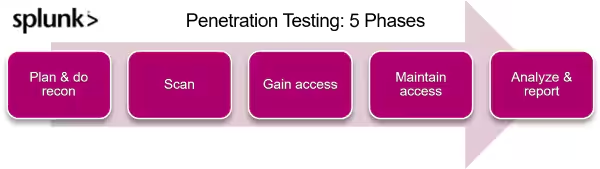
Phase 1. Reconnaissance and planning
In the first phase, the penetration tester collects as much intelligence as possible about the target system and how it works. For example, domain names, social engineering methods, network infrastructure, and other entry points are needed to understand the potential vulnerabilities of the target system.
This phase aims to identify the scope and goals of the penetration testing, mapping out the attack surface of the system. This information enables the penetration testing team to understand the testing methods and tools to use during the next phases.
Phase 2. Scanning
Based on the findings from the first phase, pen testers next use appropriate tools to examine and analyze the responses from various intrusion attempts. The team uses dynamic and static analysis in this phase:
- Dynamic analysis involves inspecting the application code at run time to get a more realistic view of the application in production.
- In static analysis, pen testers examine the code without executing it.
In this phase, pen testers can use automated and manual scanning tools to inspect the target system. Vulnerable areas — open ports, open services, and live hosts, for example — are identified during the scanning phase.
Phase 3. Gaining access
In the next phase, pen testers carry out simulated attacks to exploit the vulnerabilities identified in the previous phase. The objective is to understand two items:
- What security controls the attackers can bypass or hack.
- How deeply they can access the system.
Attackers use various attack methods to exploit those vulnerabilities. A few examples of such attacks include SQL injection attacks, social engineering, buffer overflows, Cross-Site Scripting (XSS), and DDOS attacks using the best tools and techniques. For each test case, they can use penetration techniques such as:
- Intercepting network traffic.
- Elevating user access privileges.
- Manipulating or deleting data.
Phase 4. Maintaining access
Now you can assume that attackers can gain unauthorized access to your systems. The next phase, then, is maintaining that access to simulate the persistent presence in the system. Advanced persistent threats (APTs) can connect with the system for a long time to gain in-depth access to the system and carry out their goals.
In this phase, pen testers try to stay undetected by the security system and gain access to more valuable data or modify specific functionality. This phase helps testers understand the state of security controls. It will help them identify more advanced threats and showcase their potential impacts on the business.
Phase 5. Analysis and reporting
In the final phase, pen testers analyze the data gathered during the test. This data analysis, delivered as a readable report, should explain:
- The discovered vulnerabilities and what threat actors could exploit from these vulnerabilities.
- Which techniques and tools they used to exploit them.
- The types of data the team could access
- How long they could stay in the system after an intrusion without being detected by existing security controls.
Lastly, the report sums up the recommendations from the pen testers on improving their security mechanisms to avoid such exploitation. The security professionals of the organization can then analyze it and implement the necessary remediations.
Penetration testing types
Different types of pen testing have evolved with the advancements in tools and technologies used in organizations. This section describes some of the general pen testing types suitable for organizations.
Web application penetration testing
This group focuses on the vulnerabilities of web applications. It includes web application components like the front-end system, back-end servers, databases, browsers, and plugins. Common vulnerabilities they exploit include Cross-Site Request Forgery (CSRF), SQL injection, and XSS.
(Read our full explainers on web app security & web app vulnerabilities.)
Network penetration testing
External and internal network infrastructure and services are tested to identify vulnerabilities and entry points to the internal computer system.
A few examples include network devices like routers, switches, firewalls, and protocols. It can also include insider threats from cybercriminals disguised as employees of the organization.
Wireless network penetration testing
Specifically focuses on the vulnerabilities of the wireless networks of the company. For example, weaknesses in wireless access points, wireless devices, and encryption techniques.
Physical penetration testing
All security threats do not come in digital form, as cyber physical systems make clear. Bad actors can also:
- Physically breach the security locks of your building or office.
- Bypass or disable surveillance cameras.
- Gain unauthorized access to physical systems.
Physical penetration testing tries to simulate such behavior and identify potential vulnerabilities.
Social engineering penetration testing
Today, many cyberattacks come through social engineering techniques.
For example, phishing through emails and social media and click baiting can expose the organization to sensitive data breaches. This type of pen testing can reveal..
- How employees respond to such tactics.
- Which employees can potentially share sensitive information.
IoT penetration testing
For companies that rely on IoT devices, pen testing helps identify weaknesses in target Internet of Things (IoT) devices like smart wearables and appliances. They focus on areas like communication protocols and weaknesses in data privacy.
(Related reading: IoT security & IoT monitoring.)
Red Teaming Penetration Testing
Red teaming penetration testing is a comprehensive pen test that could involve all the pen test types described above. Thus, it can assess the security of your entire system and identify potential vulnerabilities in a more holistic manner.
In this approach, a ‘red team’ or independent pen testers are hired externally to carry out simulated attacks on the networks and systems of the organization using a combination of all the above-described pen test types.
(Know the difference: red team versus blue team in cybersecurity.)
Penetration Testing Tools
Several penetration testing tools have been developed, depending on the type of penetration testing. Let’s see some of the popular pen testing tools organizations use worldwide.
- Nmap (Network Mapper) is a popular port scanner tool that scans and identifies online hosts, network services, and operating systems. It is specifically useful in the renaissance and planning phase.
- Wireshark is used to analyze various network protocols and identify any issues in TCP/IP connections. It provides real-time protocol analysis to monitor the network.
- Burp Suite is a tool developed by Portswigger. It offers many functionalities for pen testing, such as simulating man-in-the-middle (MITM) attacks, network traffic inspection, clickjacking attacks, CSRF exploits, etc.
- John the Ripper is a specially designed tool to crack passwords. It includes several features for password cracking tests, including detecting password hashes, cracking specific password encryption, and support for passwords in databases and file systems.
- W3af is a framework used to detect and explicit web application vulnerabilities. It provides plugins for attack, audit, and discovery. Then, it will provide the data to an audit tool to identify issues.
- Metasploit is one of the widely used pen testing tools that automates penetration testing. It allows pen testing teams to scan and infiltrate networks, simulate social engineering attacks, etc.
- Kali Linux is an operating system armed with tools for pen testing and related security testing. The tools included in this OS include Nmap, Wireshark, John the Ripper, sqlmap, armitage, and Burp Suit.
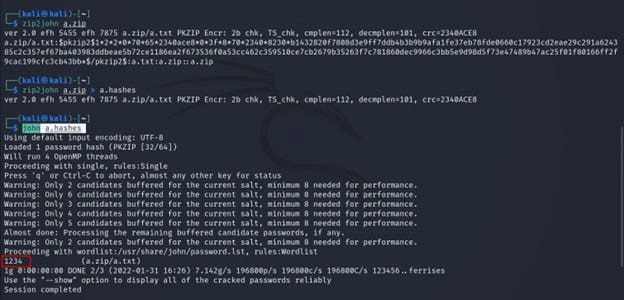
Here’s an example of John the Ripper cracking passwords:
echo ‘hello’ > a.txt

zip -e a.zip a.txt

zip2john a.zip > a.hashes

john a.hashes
You can see how John the Ripper was able to crack the password:
Penetrating testing: how far a hacker can penetrate
Pen testing aims to identify systems and network vulnerabilities, allowing organizations to strengthen their security. It involves six phases: planning and reconnaissance, scanning, gaining and maintaining access, and analysis.
Different types of penetration testing can be used depending on the components being tested. The red teaming pen test covers various security vulnerabilities, providing a holistic approach. Many pen testing tools help testers simulate various attacks and automate the process. Pen testing provides numerous advantages, including revealing known and unknown security issues, eliminating unnecessary costs, and improving security awareness.
Related Articles

SBOMs: Software Bill of Materials, Explained

Cloud Cost Management & Trends in 2026: Strategies to Optimize Your Cloud Spend