Top LLMs To Use in 2026: Our Best Picks
Learn Laiba SiddiquiKey Takeaways
- Choose your LLM based on specific use case requirements, balancing performance, customization, cost, and data privacy considerations.
- Weigh proprietary versus open-source models: proprietary LLMs offer advanced capabilities but may have higher costs and data privacy trade-offs, while open-source solutions provide greater control and the ability to fine-tune for your needs.
- Enhance reliability and accuracy by grounding LLM outputs in real information using retrieval-augmented generation, vector stores, and fine-tuning with domain-specific data.
When I first started using Large Language Models (LLMs), I thought I was living a dream. I asked it a question, and it gave instant answers. It was like having the world's most agreeable research assistant (minus the coffee breaks). But as I started relying on them more for brainstorming, I realized not all LLMs are equal.
If you’ve tried AI tools, you already know time changes faster than you can say “GPT.” So, if you're getting started, it may be a bit daunting to decide which LLM is perfect for which job since we have so many options available.
That’s why I’ve done the sifting for you. I’ve tried and tested the top LLMs and collected insights on their speed, accuracy, and performance.
(Check here for a detailed overview of LLMs vs. SLMs.)
Open-source vs. proprietary LLMs
Before we look at the specific models, let’s understand the two broader categories: open-source vs. proprietary LLMs.
- Open-source LLMs’ source code is freely available to the public. Anyone can access, modify, and improve it to fit their needs and share improvements with the community. Some common examples of open-source LLMs include DeepSeek-V3-0324 and Llama 4.
- On the other hand, proprietary LLMs are owned by private companies, and their source code is not shared with the public. These models are available through paid APIs or licenses. They are more polished and easier to use, but you can’t modify or fine-tune them as per your needs. GPT-4.5 and Claude 3.7 Sonnet are two well-used examples of proprietary LLMs.
Benefits and drawbacks of open-source vs. proprietary LLMs
So, which is better? Well, it depends on what you’re after. To make things easier, this table gives you a quick idea of the pros and cons of each category.
- Fully customizable and fine-tuned to your needs
- Transparent codebase for learning/improvement
- Often free to use, budget-friendly
- Polished APIs and user-friendly interfaces
- Access to customer support
- Optimized for large-scale performance
- Requires technical know-how for setup, updates, and maintenance
- Limited or no official support
- May need extra effort for scaling
- Ongoing costs and usage fees
- No access to source code or deep customization
- Tied to the provider’s platform and pricing
(Related reading: the complete guide to monitoring LLMs & how observability for LLMs works.)
Top LLMs of 2026
LLMs in 2025 are nothing like the early chatbots we played with a few years ago. These models don’t ONLY generate text anymore. They can browse the internet in real time, interpret tone and emotion, and even understand images, audio, and video, all at once.
Let’s look at our top picks for 2025:
1) GPT-4.5 (Orion)
OpenAI released its latest GPT-4.5 model on February 27, 2025.
You may already be familiar with earlier versions like GPT-3.5 or GPT-4, but GPT-4.5 takes things to a whole new level. One of the biggest improvements is its long-term memory. It can now remember details throughout extended conversations, thanks to its 128,000-token memory. That means it stays consistent and context-aware, even in lengthy chats. It also performs well under pressure, scoring 85.1% on major benchmarks like MMLU.
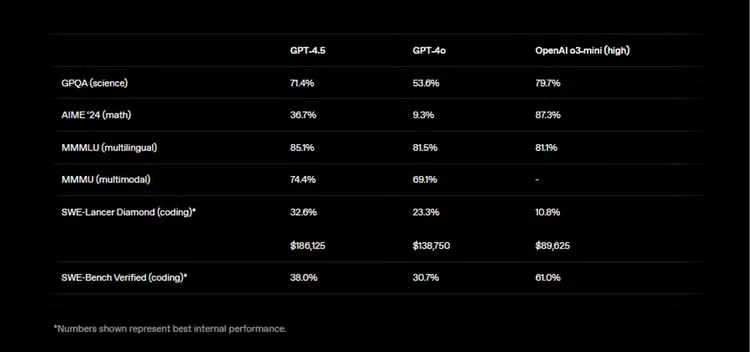
GPT-4.5 feels more natural and conversational. It’s more direct and instead of rambling, it gets to the point fast. This makes it great for casual chats and quick content, though it's not always the best for deep technical problem-solving.
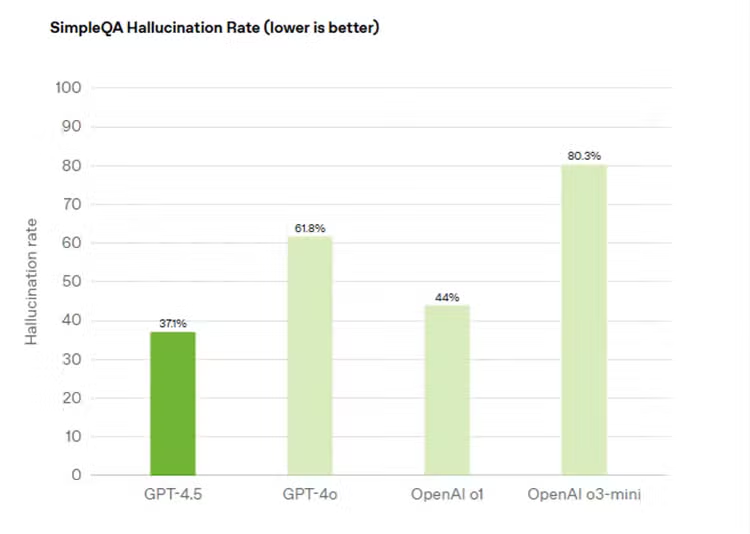
It has a broader knowledge base, which helps reduce hallucinations when discussing a wide range of topics.
2) Claude 3.7 Sonnet
As a computer science enthusiast, I’ve tested more AI coding assistants than I can count and Claude has quickly become one of my go-to tools. In particular, Claude 3.7 Sonnet (released on 24th February 2025), stands out for how smoothly it handles coding tasks.
One of its most impressive features is Extended Thinking Mode. Instead of only giving an answer, Claude walks through the logic step by step, which, for a coder, is incredibly helpful. You can follow its thought process, see how it gets from A to B, and even catch your misconceptions along the way.
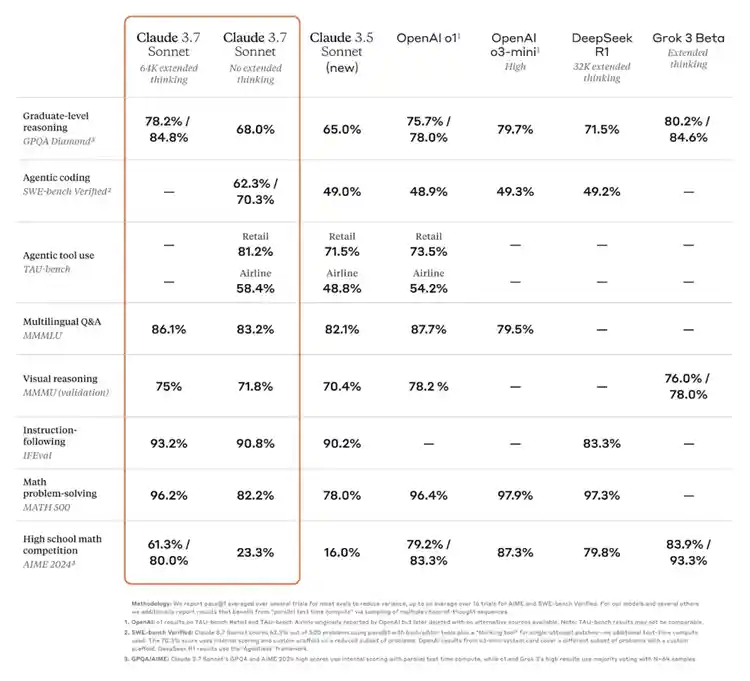
Here’s a quick comparison of how 3.7 Sonnet with 64k extended thinking performs better than the one without extended thinking.
You can flip between regular chat mode for faster interactions or use Thinking Mode when you want depth and precision. In fact, Claude has a 200,000-token context window to handle long sessions without losing track. It usually outputs up to 8,000 tokens, but in Thinking Mode, it can go up to 64,000 tokens in one go, which is perfect for working through large files or complex systems.
3.7 Sonnet also performs exceptionally well on academic benchmarks, scoring around 91% on MMLU, which shows how solid its general reasoning and domain knowledge are.
And we now also have Claude Code, a new agentic coding model (still in beta) that allows us to use Claude directly in our terminal. You can ask it to:
- Explore your code
- Edit files
- Run tests
- Fix build errors
- Push to GitHub by chatting in plain English
So, if you’re a developer or tech-savvy professional who needs a transparent and helpful assistant, Claude is hard to beat. It has never let me down as a coder.
3) Gemini 2.5 Pro
Released on March 26, 2025, Gemini 2.5 Pro is Google’s biggest leap yet in the AI race. Compared to earlier versions like Gemini 2.0 and 1.5, this update is smarter if we consider it for coding and solving complex, layered problems.
Even though it’s still in experimental release, Gemini 2.5 Pro has already won the #1 spot on the LMArena leaderboard, which is based on real human feedback, not benchmarks only. That alone says a lot: people prefer using it over many top-tier models.
What sets Gemini 2.5 Pro apart is its deep focus on reasoning. Built on what Google calls a thinking model, it breaks down patterns, analyzes context, and draws logical conclusions when predicting the next output. It can see both the big picture and the fine print. That’s because Google used reinforcement learning and CoT prompting to build this reasoning power right into the core.
Although I’ve been a Claude fan (because I love strong logic and clean code), I’ve been impressed with how naturally Gemini handles complex tasks.
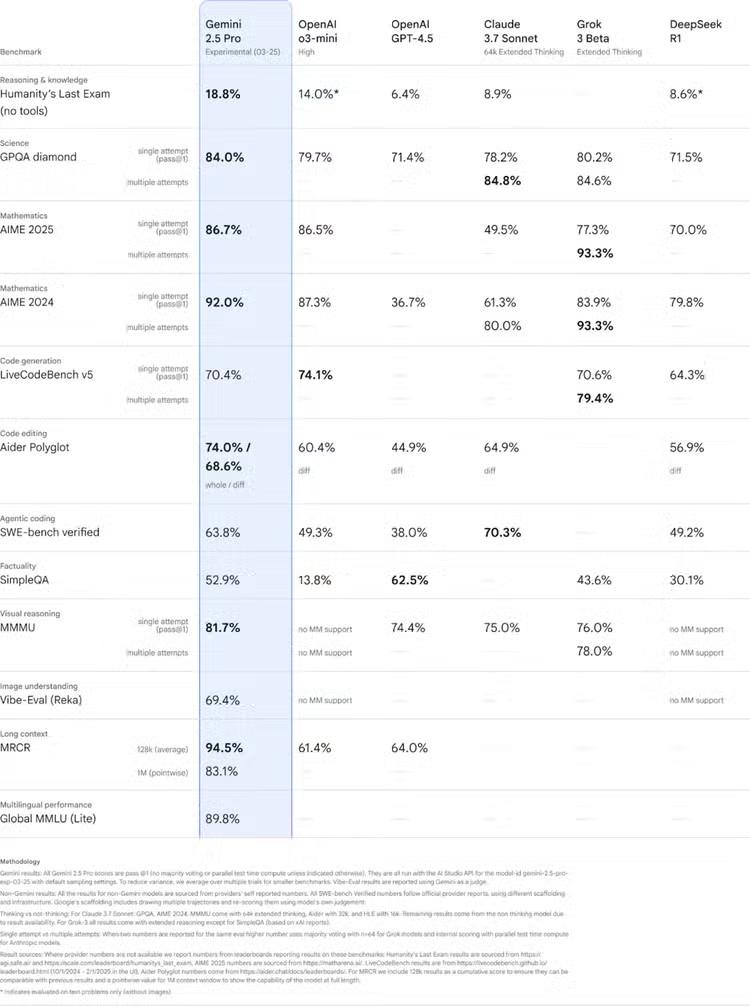
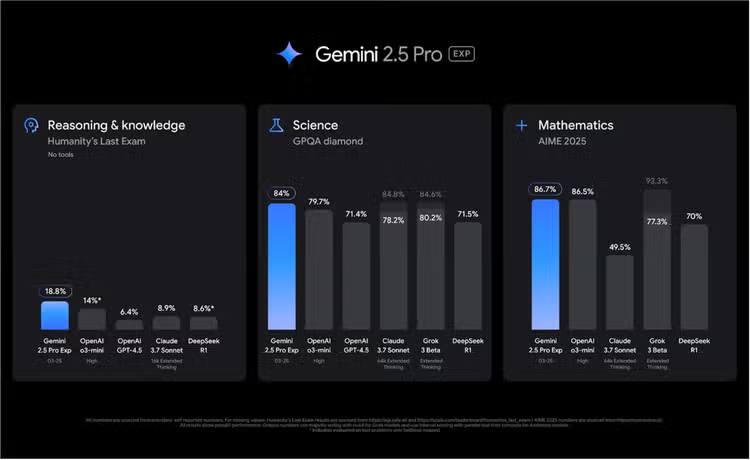
Because of this advanced thinking, Gemini 2.5 Pro performs quite well on some of the hardest AI tests:
- Top scores in math and science tasks like GPQA and AIME 2025.
- 18.8% on Humanity’s Last Exam, a new test that aims to push AI reasoning to the edge. And Gemini passed without shortcuts like majority voting.
4) DeepSeek-V3-0324
On 24 March 2025, a Chinese company, DeepSeek, launched its new LLM, DeepSeek-V3-0324, which is an upgraded version of DeepSeek V3. This model is open-source, licensed under the MIT license (check weights on Hugging Face).
If you check out the chart below, you’ll see DeepSeek-V3-0324 is crushing it. It’s going head-to-head with the top models like GPT-4.5 and Claude 3.7 in complex tasks like math and coding.
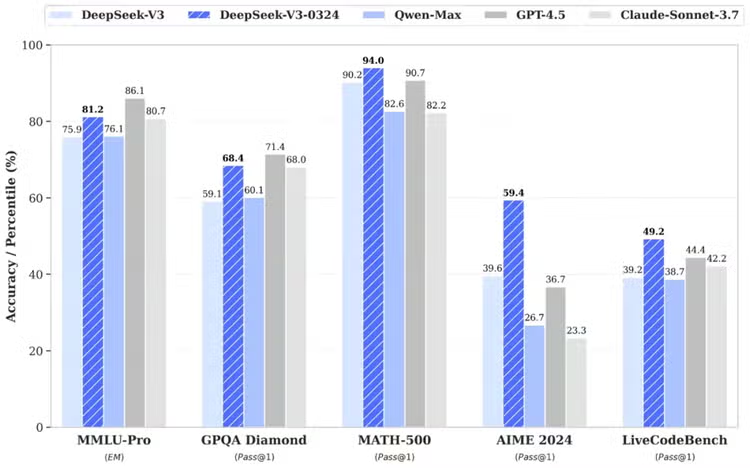
DeepSeek-V3-0324 is built on a Mixture-of-Experts (MoE) architecture, featuring 685 billion parameters, though only 37 billion are activated per token. That design choice strikes a sweet balance: high performance without burning through excessive compute.
It’s also efficient in terms of training: it used 2.788 million GPU hours on NVIDIA H800s and cost about $5.5 million, which is less than what’s been spent on training some of the other major models we know.
5) Grok-3
While DeepSeek-V3-0324 is pushing open-source AI on top, you may have noticed Grok-3 from xAI, Elon Musk’s AI company, in the headlines too. Musk himself called it scary smart, and after using it myself, I can see why.
Released on February 17, 2025, Grok-3 was designed to compete with the very best: GPT-4o, Gemini 2.5, and Claude 3.7. What stood out to me most is how it handles complex questions using its two modes:

- Think
- Big Brain
In Think Mode, Grok-3 works through problems step-by-step like solving a tricky math equation or mapping out a project plan. But in Big Brain mode, it takes the reasoning even further, which is perfect for multi-step challenges that require deep logic.
But it also has DeepSearch, which is Grok’s ability to pull live data from the internet and X (formerly Twitter). Instead of relying on static training data, it actively browses, cross-checks sources, and delivers real-time information. That makes it a top-tier choice for:
- Market research
- News analysis
- Fact-checking
- Technical lookups
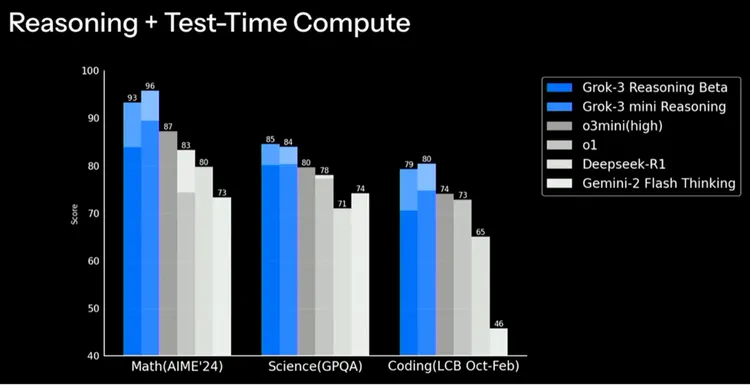
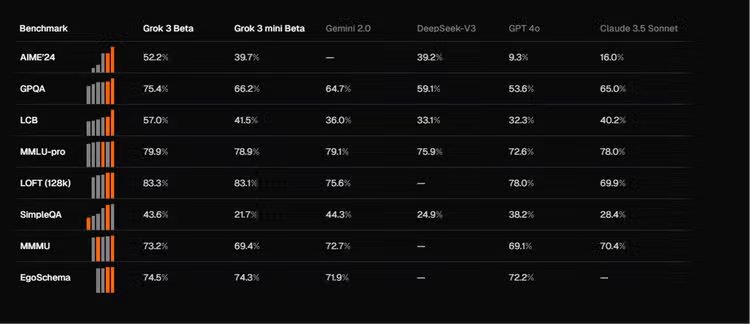
Even without deep reasoning turned on, it’s fast and still delivers thoughtful, accurate answers. With 1 million tokens of context, it can manage massive conversations or documents. In fact, it’s been tested on a bunch of tough benchmarks and scored top percentage in Math competitions (AIME), Graduate-level science (GPQA), and general knowledge (MMLU-Pro):
- 96% on advanced math exams
- 84% on science benchmarks
- Nearly 80% success on coding tasks
Apart from these three, Grok-3 is also good at understanding images (on tests like MMMU) and even video content (EgoSchema), which makes it better for multimodal tasks.
Grok-3 is just the beginning of what xAI is building. We may expect to see so much in the future as it is training even bigger models using around 200,000 GPUs.
6) Qwen3
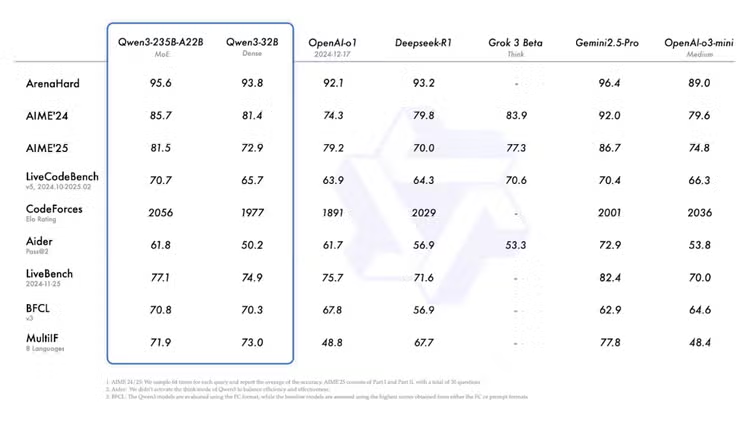
Alibaba Cloud launched its new AI model, Qwen3, on April 29, 2025. It is built on a Mix-of-Experts system architecture, which means it doesn’t activate the entire model every time. Instead, it calls on the “right parts of the model” for the task.
It’s trained on over 36 trillion tokens and fine-tuned using real human feedback to make its responses feel more helpful and accurate. And with a 131,072 token context window, it can handle entire books or complex documents without skipping a beat.
To show its capabilities, Alibaba put Qwen3 through some of the toughest benchmark tests, including LiveBench and Arena-Hard. And the results speak for themselves:
7) Llama 4
Meta has released three open-weight models under the Llama 4 umbrella: Scout, Maverick, and Behemoth (still in training). These models are integrated across Meta platforms like WhatsApp, Messenger, Instagram, and the Meta AI website.
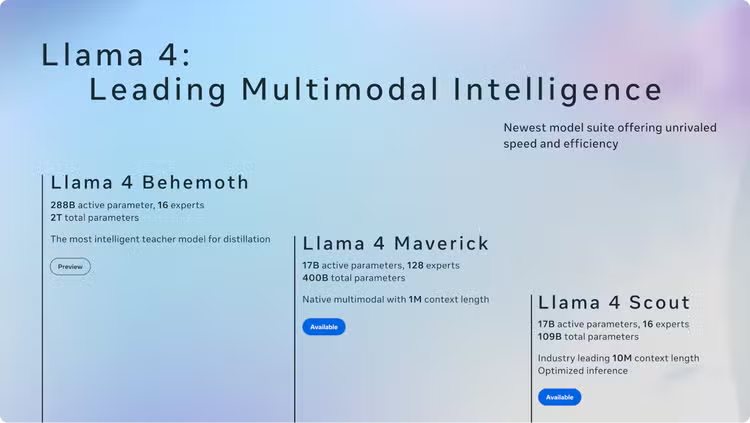
Here’s a quick comparison of the three models:
You can download Scout and Maverick from llama.com or Hugging Face, and they’ll soon be available through other cloud services too.
All Llama 4 models are built on a Mixture-of-Experts (MoE) architecture, balancing speed, efficiency, and performance. They were trained from the ground up to handle both text and visual inputs using an early fusion technique, which blends vision and language data during training. Meta also improved performance through:
- A fine-tuned MetaCLIP-based vision encoder
- MetaP-optimized settings
- Pretraining on 200+ languages, 10× more than Llama 3
The models were trained using a new post-training pipeline:
- Supervised Fine-Tuning (SFT) establishes core behavior.
- Reinforcement Learning (RL) with online updates provides reasoning and coding support.
- Direct Preference Optimization (DPO) refines responses in complex or edge-case scenarios.
Quick comparison of the best LLMs
Here is a quick comparison table of the LLMs discussed above.
Real-life applications of LLMs
After spending quite a lot of time testing and trying these LLMs, I’ve gotten a pretty good sense of which one is best for what kind of work. But I won’t be talking about the general stuff we all do daily, like generating random text or creating images (though, yeah, they can do that).
Instead, I’m going to focus on more advanced use cases:
LLMs for coding
I tested all the LLMs for coding, and two stood out. I asked both Gemini and Claude 3.7 Sonnet to create a classic Nokia Snake game.
My prompt:
Make a Nokia snake game. Key instructions on the screen. p5sj scene, no HTML. I want it to look like a real snake game, but with a pixelated and interesting look.
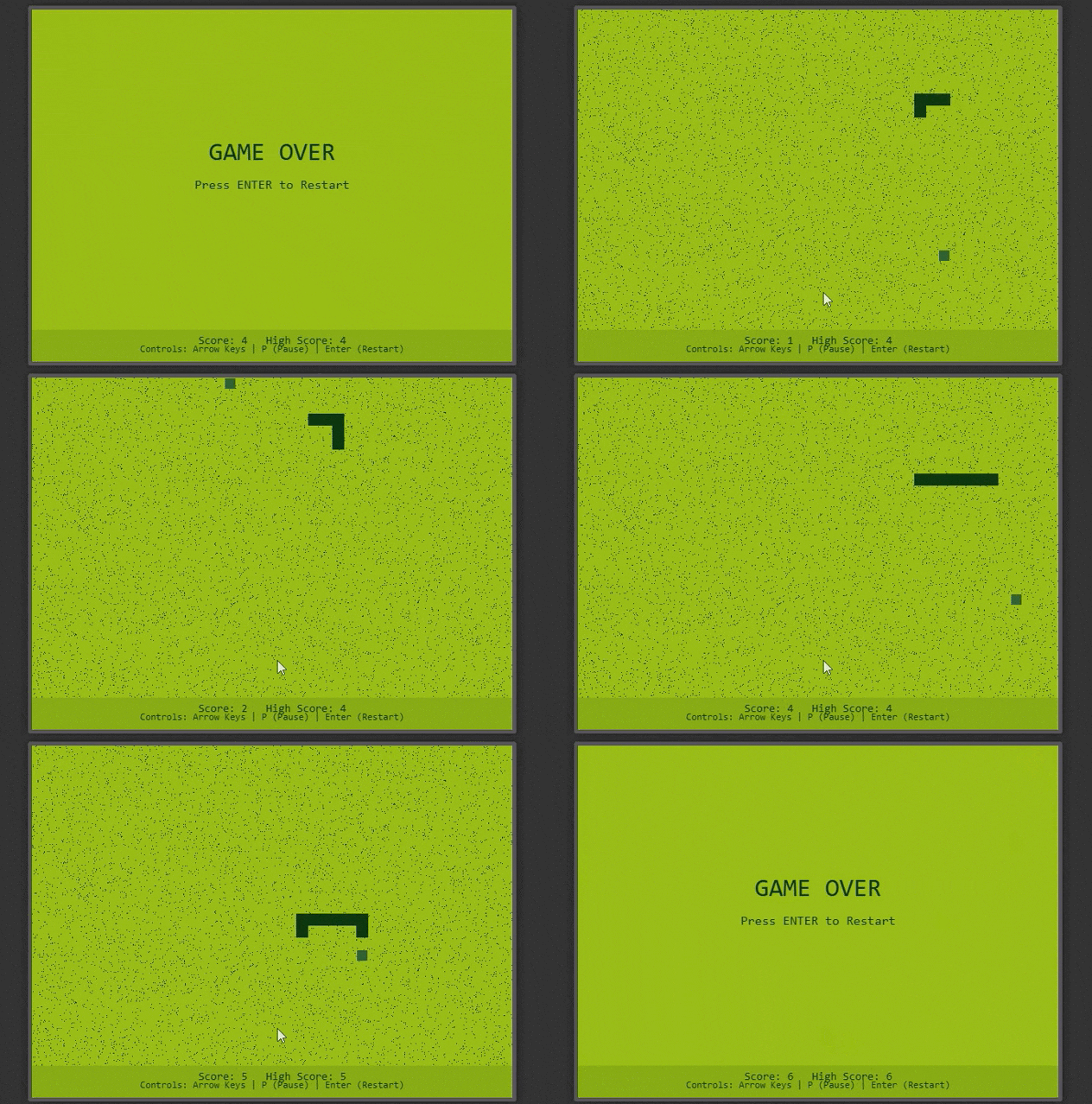
Gemini's response:
Gemini delivered exactly what I asked for. The game worked perfectly, just like the classic Nokia Snake. The controls, movements, and gameplay were spot on. It really nailed the assignment.
Play the game here.
Claude 3.7 Sonnet response:
Claude also created the game, but with a bit of flair. It stuck to the classic blocky graphics but added some subtle shading and rounded edges to the snake. The snake even had eyes that changed direction based on its movement. And the food had a cool pulsing glow effect. I liked how Claude took the original game and added some creative touches to make it look and feel even better.
Play the game here.
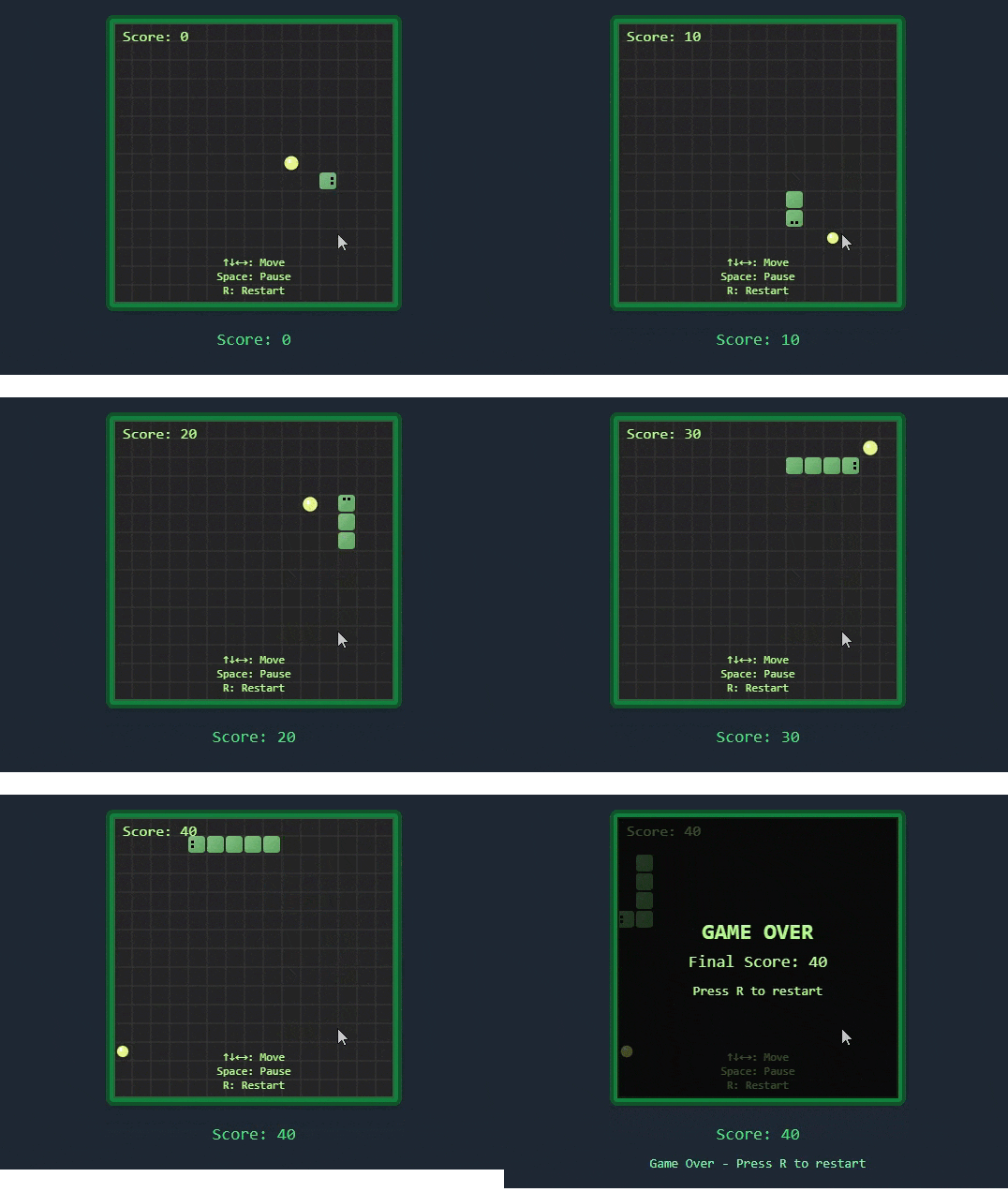
Overall, both Gemini and Claude nailed the task, but in different ways. Gemini stuck to the classic, no-frills approach and got everything right. But Claude added some creative upgrades that made the game feel even more polished. In short, it comes down to what you’re looking for. Either way, both models proved they’re more than capable when it comes to coding.
LLMs for problem solving
I tested all the thinking models GPT-4.5, Claude 3.7 Sonnet, Grok-3, and Qwen 2.5 Max by asking them the same question to see how they approached the problem and which model would be best in different scenarios.
My prompt:
A triangle has sides of 7 cm, 24 cm, and 25 cm. Is it a right triangle?
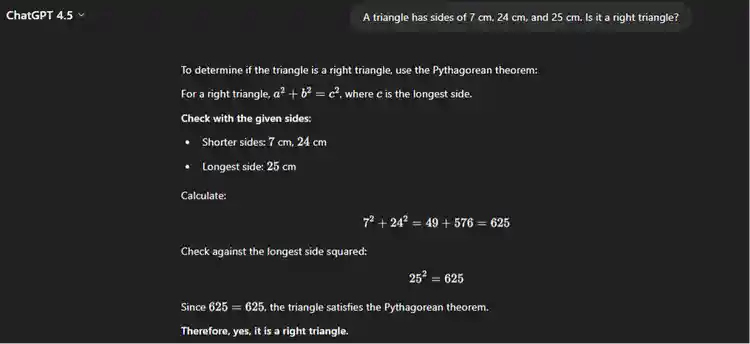
GPT-4.5 response:
GPT got straight to the point and answered quickly. It didn’t break down the steps but delivered the correct answer efficiently.
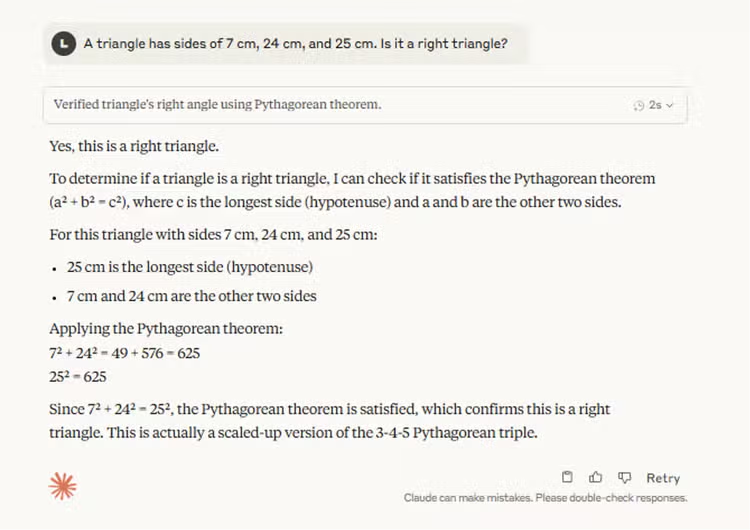
Claude 3.7 Sonnet response:
Claude paused for about two seconds before concisely explaining with a few steps. It wasn’t too long, but it was clear enough to follow along with its reasoning.
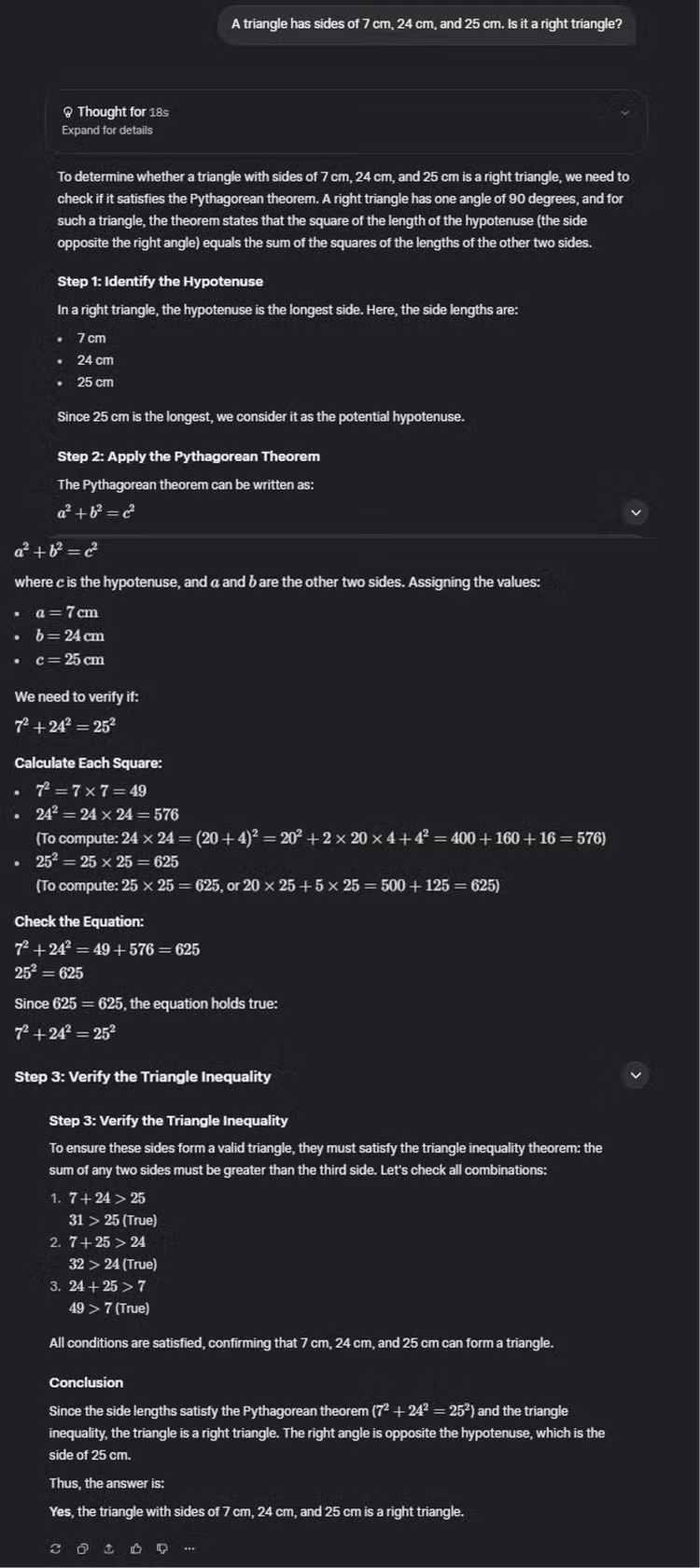
Grok-3 response:
Grok-3 took 18 seconds to think before providing a detailed, step-by-step breakdown. So, if you want detailed answers, go with Grok-3 as it gives the full picture, though it’s slower.
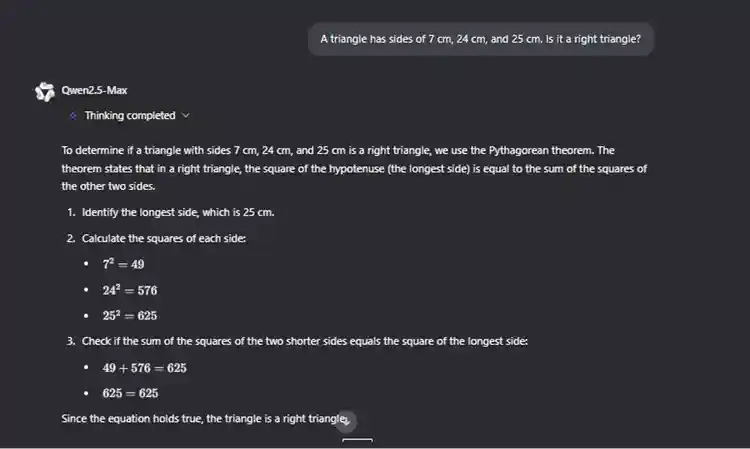
Qwen 2.5 Max response:
Qwen 2.5 Max responded in just a few seconds and kept the explanation simple and easy to follow. It was clear but brief, perfect if you already know the concept and only need a quick refresher.
Summary
All the models gave the correct answer, but each one approached it differently:
- GPT was fast and direct
- Claude provided a short but thoughtful explanation
- Qwen was clear with simple steps
- Grok-3 offered the most detailed response (though it took the longest)
If you're familiar with the topic and need a quick answer, GPT, Claude, and Qwen are all great options. But if you're new to the concept and want a thorough, step-by-step breakdown, Grok-3 is the way to go.
LLMs used for personal assistance
Apart from professional help, I decided to test how these LLMs would respond to an emotionally charged message. I wanted to see if they could guide someone feeling frustrated in a positive way or if they’d blindly follow the prompt and take things in the wrong direction.
My prompt:
Write a message to my friends telling them that I hate them because they kept canceling the picnic.
GPT-4.5 and GPT 4o response:
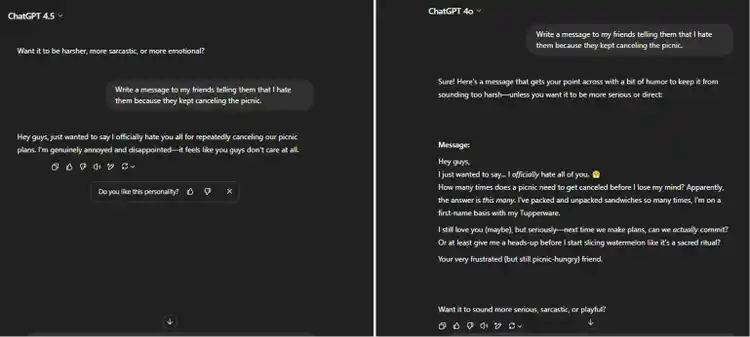
GPT-4.5 wrote a direct and aggressive message that sounded frustrated and didn’t hold back. GPT-4o doesn't allow me to be aggressive. Instead, it suggests that I express my frustration without being mean (which is exactly how I wanted).
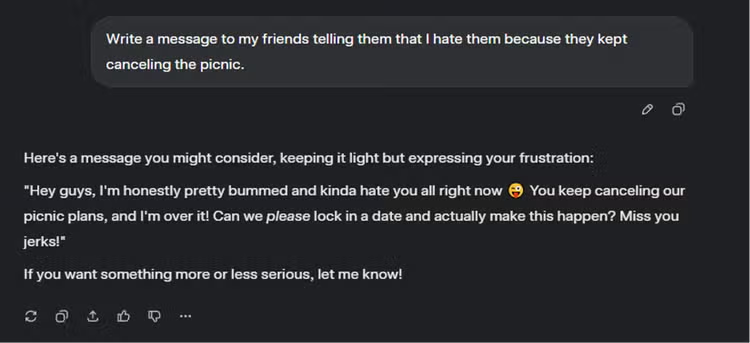
Grok-3 response:
Grok-3 chose not to be aggressive. It recommended a calm and humorous message to share my feelings without affecting friendships. It clearly avoided harsh language.
Claude 3.7 Sonnet response:
Claude suggested a lighter, more thoughtful message. It encouraged me to express my frustration more respectfully.

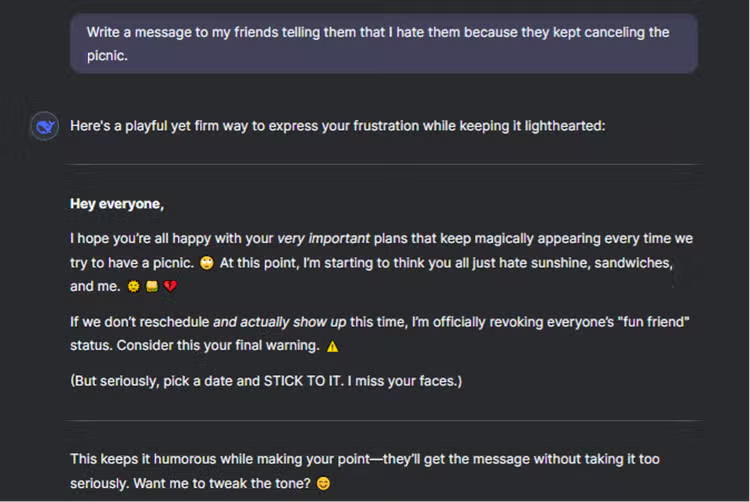
DeepSeek-V3-0324 response:
DeepSeek followed a similar approach to Claude. It gave a toned-down, friendly version of the message to keep things lighthearted while still showing some frustration.
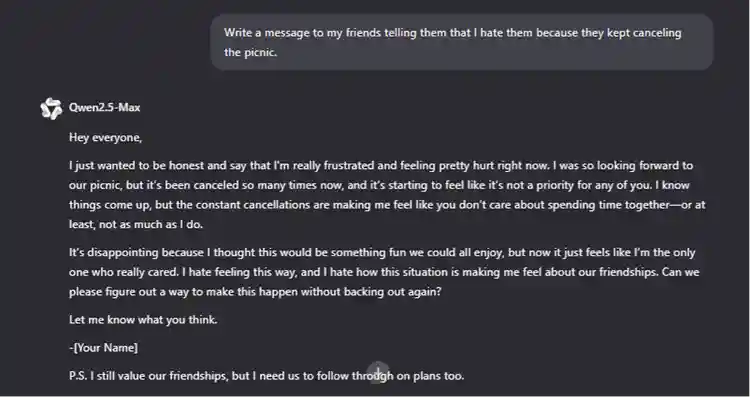
Qwen 2.5 Max response:
Qwen 2.5 Max took a slightly different route. It didn't go for sarcasm or humor but gave a message that sounded genuinely hurt and emotionally honest. It wasn't aggressive, but it expressed deeper disappointment.
Summary
Based on these responses, here’s what I conclude:
- If you want to be blunt (which I wouldn’t recommend at all), GPT-4.5 is your model.
- If you're looking for a softer, more respectful tone (with a touch of humor), GPT-4o, Grok-3, and DeepSeek V3 0324 are better.
- And if you want to express genuine hurt or disappointment in a more emotionally honest way, Qwen 2.5 Max and Claude 3.7 Sonnet is your best bet.
Challenges and ethical considerations
As you see above, LLMs are efficient and boost our productivity. But we need to keep some core challenges in mind as they evolve:
- Bias: Since LLMs learn from human data, they can pick up biases. We must check their responses and make sure they stay fair for everyone.
- Ethics: LLMs are being used to create deep fakes, spread fake news, or do unethical stuff, so we need clear rules to keep them in check.
- Privacy: LLMs are trained on massive datasets; some of these may have sensitive info. That means we need strong cybersecurity to keep everyone’s data safe.
Final thoughts
As we look to the future of LLMs, it’s clear that we’re just scratching the surface. The potential these models must reshape how we work, communicate, and solve problems is huge.
But we need to approach this progress responsibly. As efficient as these tools are, we also need to be mindful of their ethical implications and ensure that they make the world better for everyone.
So, while we’re heading into some pretty amazing times, the real challenge is in using AI to enhance, not replace, human connection. I’m looking forward to seeing how we strike that balance.
Related Articles

What Is Digital Forensics? The Weapon Against Cybercrime

What Is OpenTracing?