What Is Data Logging?
In a world where data is the driving force behind informed decision-making, the use of data loggers has become crucial for businesses and industries alike. The data logger market is expected to grow at a CAGR of 7.60% until 2029.
But what exactly is data logging, and how can it help improve various processes?
In this blog post, we’ll cover an overview of data logging, including its key components, types, applications, and best practices for success.
Data logging: An overview
Data logging, or data acquisition, involves capturing, storing, and presenting datasets.
It can be used for diverse applications such as supply chain management, machine diagnostics, and regulatory compliance.
Data logging automates data monitoring and recording to ensure precision and save time for personnel.
A data acquisition system can be employed in many industries, such as tracking supply chain and transportation activity, measuring environmental conditions, and evaluating network performance.
What is a data logger?
A data logger is an electronic device that consists of a microprocessor, memory, and one or more sensors. These electronic devices are designed to record environmental parameters such as temperature, humidity, pressure, and more, depending on the specific application.
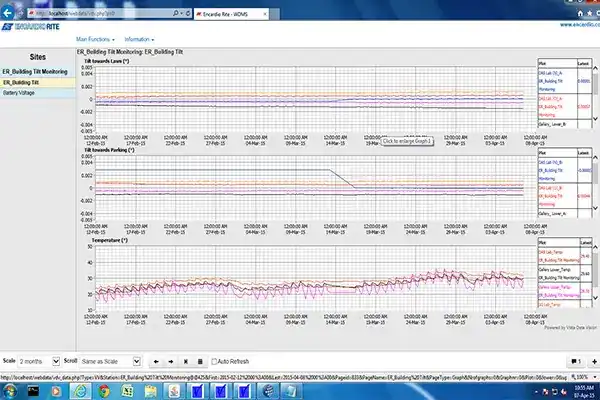
Output from a data logger on a PC. (Source)
The sensors collect data, the memory stores it, and the microprocessors process the data, allowing users to retrieve the data from the memory for analysis and decision-making.
These data loggers can be programmed to take readings at regular intervals according to your measurement requirements.
Components of a data logger
To help you understand how they work, let's have a look at what makes up a data logger.
The most critical components of a data logger are the sensors, memory, and microprocessor.
- Sensors: These are the devices that measure and record physical parameters such as temperature, pressure, or humidity.
- Memory: This is where data is stored after it has been collected by the sensors. The size of the memory determines how much data can be stored.
- Microprocessor: This component processes the data and allows users to retrieve it for analysis and decision-making.
- Power source: Data loggers can be battery-powered or use an external power source, depending on the application and location.
Each of these components plays a crucial role in the overall functionality and accuracy of a data logger.
Types of data loggers
Data loggers come in various types, each with its own set of advantages and disadvantages. Here are 4 types:
- Standalone data loggers
- Wireless data loggers
- Computer-based data loggers
- Web-based data loggers
Let's have a look at each of them in detail.
Standalone data loggers
Standalone data loggers are compact, portable devices that can operate independently of a computer, making them ideal for on-site or remote data collection.
They are capable of collecting various types of data, such as voltage and temperature, and storing it directly in the device or flash memory.
Standalone data loggers generally feature a USB port for easy data transfer and offer a battery life that can range from 1 year to more than two years, depending on the model and application.
Utilizing standalone data loggers offers several benefits, such as:
- The capability to employ them in far-reaching or hazardous conditions
- Cost-efficiency in comparison to chart recorders
- The ability to gather data automatically on a 24-hour basis
This makes them a popular choice in various industries and applications! Here are some examples:
- Agriculture and farming: monitoring soil moisture, temperature, and humidity for optimal crop growth
- Food storage and transportation: tracking temperature and humidity to ensure food safety
- Environmental monitoring: measuring air quality, water levels, and more for research and regulatory compliance
- Industrial manufacturing: recording temperature and pressure to maintain product quality and safety standards.
Wireless data loggers
Wireless data loggers offer the convenience of automatic data transfer through cloud technology, eliminating the need for manual data retrieval.
These data loggers utilize wireless technology, such as Bluetooth or Wi-Fi, to collect and transmit data without the requirement of physical cables or connections.
They are capable of monitoring and recording alterations in conditions over time, such as temperature, humidity, or pressure, and transmitting the data to a central system or device for analysis and storage.
The benefits of deploying wireless data loggers with a cloud-based databank include
- Faster data transmission compared to manual retrieval
- Instant visibility of information across the supply chain
Computer-based data loggers
A computer-based data logger is a device that uses software installed on a PC to collect, process, and analyze data from external sensors.
They are often used in laboratory settings due to their high accuracy and precision.
These loggers aid in capturing sensor data in real time and provide instant data analysis through software applications once the data is transferred to a computer.
These data loggers are flexible, allowing users to customize parameters such as sampling rates and measurement intervals.
Computer-based data loggers offer several benefits, including:
- Network communication
- Enhanced capabilities
- Integration with other equipment
- Automation
- Flexibility
However, they do require a computer connection for operation, making them less suitable for remote or hazardous conditions.
They also require an initial investment cost and the risk of data loss in the event of equipment malfunction.
Web-based data loggers
A web-based data logger is a type of remote monitoring device that has the ability to record and transmit data via an internet connection.
These loggers are equipped with sensors for measuring various parameters, such as temperature, humidity, and pressure, and can be accessed from anywhere through a web browser.
Web-based data loggers offer the following benefits:
- They store data on remote servers, allowing for real-time monitoring and analysis without draining the battery of the associated endpoint.
- The data logger connects to a remote cloud-based server via the internet and transmits the logged data to the cloud server, which serves as a repository for the data.
- This enables convenient storage, access, and analysis of the logged data from any location globally.
However, there are also potential drawbacks, such as security risks, reliance on internet connection, and the possibility of vendor lock-in.
Applications & use cases for data logging
Data logging has a wide range of applications and use cases, providing valuable insights and helping to improve various processes across numerous industries.
From supply chain management to machine diagnostics and regulatory compliance, data logging plays a crucial role in helping businesses make informed decisions based on accurate and reliable data.
In the following sections, we’ll explore some common applications and use cases for data logging.
Supply chain management
Data logging plays a vital role in supply chain management by providing real-time insights into product conditions and helping to prevent losses.
Some key benefits of data logging in supply chain management include:
- Tracking products throughout the entire supply chain
- Monitoring temperatures to guarantee product quality and safety
- Recording and tracking environmental data such as humidity
- Augmenting AI capabilities in the supply chain
These data loggers are great tools to be used in the logistics industry for monitoring operations and improving overall efficiency.
Machine diagnostics
Machine diagnostics can be improved through data logging, allowing for proactive maintenance and reduced downtime.
Data logging permits the monitoring and recording of various parameters, such as:
- Voltage
- Temperature
- Pressure
- Speed
- Vibration
This data can then be evaluated to diagnose machine issues, monitor performance, and make informed decisions for maintenance and optimization.
This enables maintenance teams to proactively address these issues, plan preventive maintenance, and replace or repair components before they fail.
This proactive approach helps to decrease downtime, cut down maintenance costs, and optimize the overall performance and lifespan of the machines.
Regulatory compliance
Regulatory compliance can be achieved more easily with data logging, as it provides accurate and reliable records of various parameters.
Proper data logging practices are essential for:
- Demonstrating adherence to regulations
- Ensuring data security
- Ensuring compliance with safety regulations in a variety of industries.
To ensure data accuracy in regulatory compliance, here are some measures to take:
- Create a centralized database to store all data results
- Utilize automated data capture methods
- Implement data validation and verification processes
- Regularly review and analyze data for errors or inconsistencies
- Establish metrics to measure data quality and track improvements over time.
Data retrieval and analyzing logged data
Once data is logged, its retrieval and analysis of the collected data are necessary for making informed decisions based on the gathered information.
There are several methods available for retrieving data from a data logger, including direct data retrieval, wireless data transfer, and cloud-based data management.
The following sections will delve deeper into these methods, discussing their pros and cons.
Direct data retrieval
Direct data retrieval involves manually extracting record data from a data logger, typically through a memory card, USB connection, or internal memory.
To retrieve data, it should be conducted at regular intervals, based on the specific requirements of the application, ranging from a few hours to daily, weekly, or monthly.
Direct data retrieval provides several advantages, including:
- Time-saving
- Efficiency
- Accuracy
- Real-time monitoring
- Automation
However, there are also potential risks and drawbacks associated with direct data retrieval in data logging, such as:
- Patient privacy violations
- Data quality issues
- Limited data capture
- Data loss
Wireless data transfer
Wireless data transfer allows for automatic data retrieval through cloud technology, making it more convenient and efficient than manual retrieval methods.
Wireless data loggers use technologies such as Wi-Fi, Bluetooth, or cellular networks to transfer data wirelessly, making it easier to monitor and capture data in remote locations or when the data logger cannot remain tethered to a computer.
Wireless data transfer has several advantages in data logging, including:
- Remote monitoring
- Real-time data collection
- Easy installation
However, there are some potential challenges and limitations associated with wireless data transfer in data logging, such as signal reach, bandwidth constraints, network failure, connectivity issues, and security risks.
Cloud-based data management
Cloud-based data management involves storing and managing logged data in a remote cloud server accessible through the internet.
Cloud-based data management enables users to:
- Access and analyze their logged data from anywhere, at any time.
- Establish a connection between a data logger and a remote cloud-based server via the internet.
- Transmit the logged data to the cloud server, which serves as a repository for the data.
- Conveniently store, access, and analyze the logged data from any location globally.
Cloud-based data management presents several advantages, including scalability, flexibility, and remote accessibility for data storage applications.
Frequently Asked Questions
What is the difference between a data logger and a data recorder?
A data logger is a device used to record and store data from various sensors or instruments, while a data recorder typically refers to a device that records audio, video, or other types of media.
Data loggers are commonly used in scientific and industrial applications, while data recorders are more often used for entertainment or evidence-gathering purposes.
However, the terms may sometimes be used interchangeably.
How do I choose the right data logger for my needs?
Choose a data logger that meets your requirements based on sensor types, memory capacity, and connectivity options to ensure successful operation.
Wrapping up
Data logging is a critical tool for businesses and organizations seeking to make informed decisions based on accurate and reliable data.
Here are some key takeaways:
- Data logging enables accurate monitoring and recording of various parameters for proactive maintenance and reduced downtime.
- Regulatory compliance can be achieved more easily with data logging, as it provides accurate and reliable records of various parameters.
- Proper data logging practices are essential for ensuring regulatory compliance, data security, and safety regulations across various industries.
- There are different methods available for retrieving data from a data logger, including direct data retrieval, wireless data transfer, and cloud-based data management.
Data logging is an ever-evolving field, with advancements in technology leading to more efficient and effective ways of logging and analyzing data.
As businesses continue to rely on data-driven decision-making, investing in proper data logging practices will become increasingly crucial for success.
FAQs about Data Logging
Related Articles
How to Use LLMs for Log File Analysis: Examples, Workflows, and Best Practices

Beyond Deepfakes: Why Digital Provenance is Critical Now

The Best IT/Tech Conferences & Events of 2026

The Best Artificial Intelligence Conferences & Events of 2026

The Best Blockchain & Crypto Conferences in 2026

Log Analytics: How To Turn Log Data into Actionable Insights

The Best Security Conferences & Events 2026

Top Ransomware Attack Types in 2026 and How to Defend