Cisco AppDynamics modernizes self-hosted observability for hybrid application monitoring
We’re excited to announce multiple innovations available now in Cisco AppDynamics On-Premises, including AI-powered detection and remediation, application security with Cisco Secure Application, application and business performance monitoring for SAP® Solutions, and a virtual appliance deployment option.
Plus, new Cisco AppDynamics Flex Licensing offers flexible and frictionless entitlements, so you can shift some or all your on-premises licenses to AppDynamics SaaS as your requirements allow. Please refer to the pricing guidelines or contact us for more information.
AppDynamics remains committed to self-hosted observability solutions, including on-premises, for our customers who require it, for example to meet government regulations for data residency and industry requirements for data protection.
So let’s dive in.
Speed anomaly detection and root cause analysis with AI-powered detection and remediation
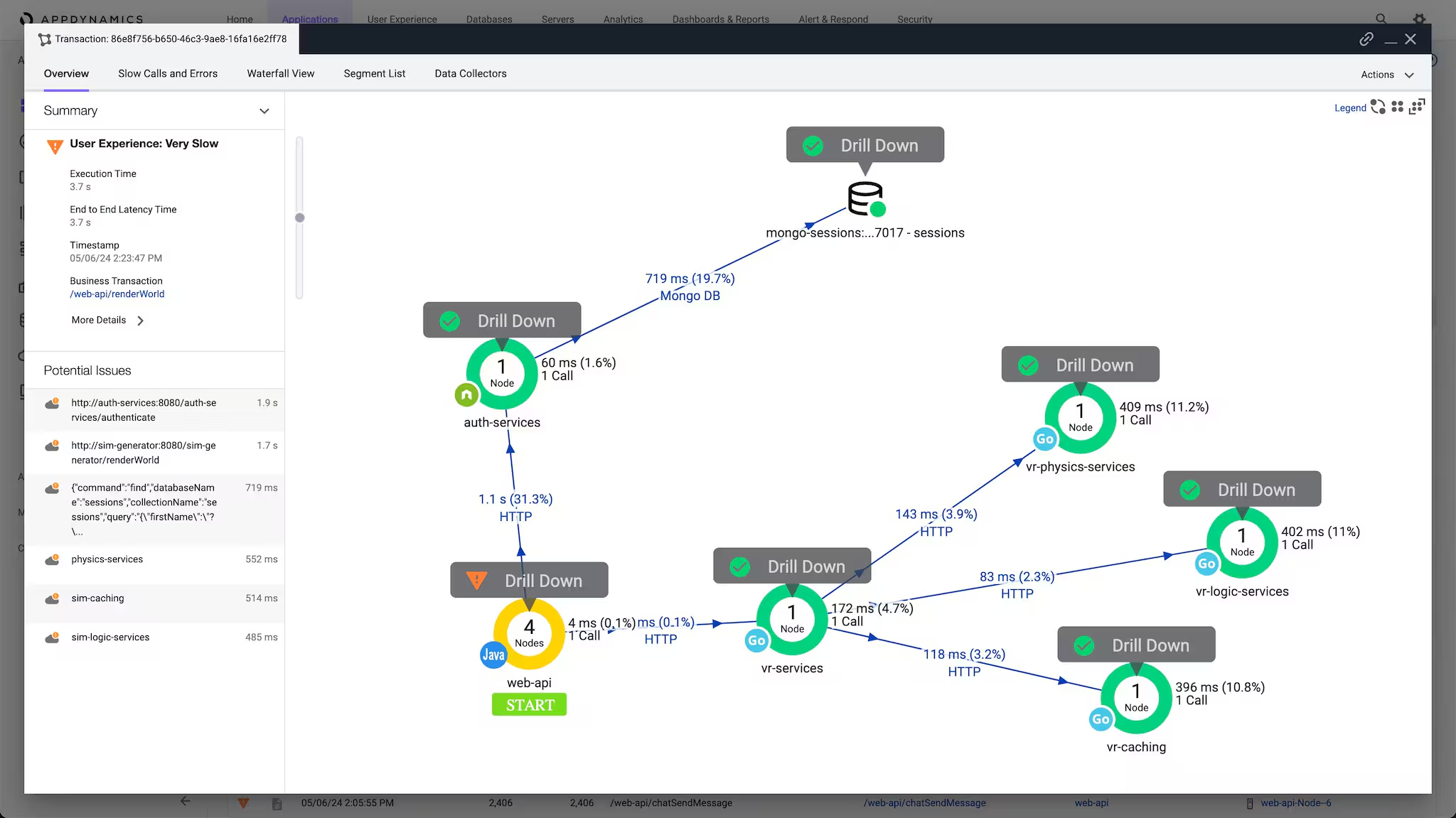
With the AI-powered Cognition Engine, you can proactively and more accurately identify performance issues, resolve them faster, and improve operational efficiency within the business.
- Identify anomalies based on historical trends using anomaly detection and baseline performance that accounts for seasonality and normal periodic spikes.
- Resolve problems quicker with root cause analysis, reducing the areas necessary for investigation with suggestive issue identification and continuous snapshots containing the relevant details for investigations.
- Improve operational efficiency and reduce complexities by using a modern virtual appliance deployment model.
Reduce business risk with Cisco Secure Application
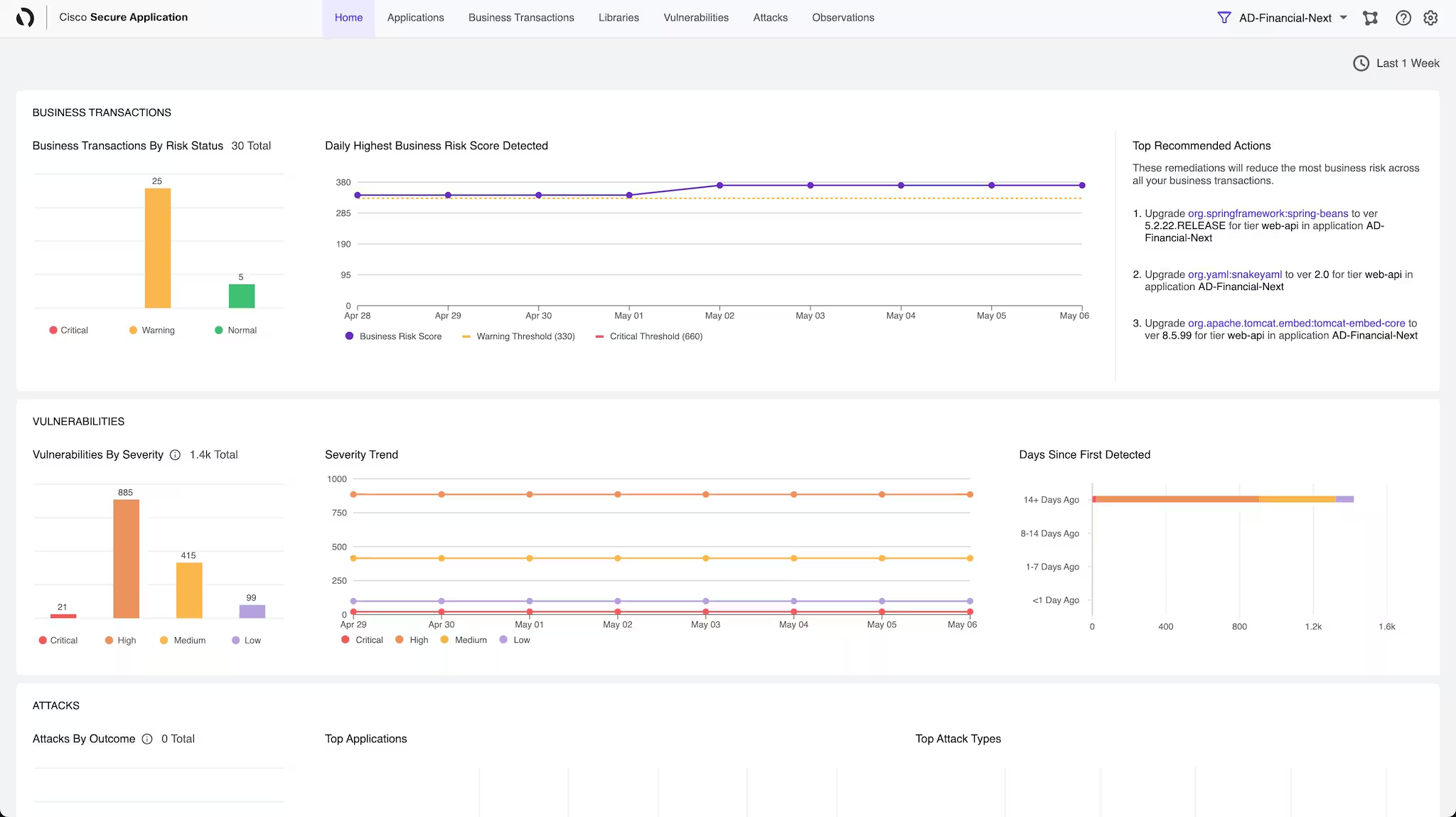
Reduce business risk for application and security operations by identifying vulnerabilities and threats from the inside out with Cisco Secure Application, which gives you security business insights, security threat visibility, and security risk prioritization so you can:
- Prioritize remediation based on risk factors by continuously scanning, monitoring, and detecting known vulnerabilities in applications.
- Increase the speed and accuracy with business risk observability, which combines threat detection + threat intelligence + business impact to create a composite risk score to instantly identify which threats must be addressed first based on likely business impact.
- Mitigate attacks and vulnerabilities by blocking known threats using runtime policies that address the security of applications.
- Address business risk by drawing on remediation guidance, such as code language library updates.
- Increase the speed and accuracy across response teams with the most robust business risk observability solution by correlating threat and vulnerability intelligence with business impact.
- Enable otherwise siloed teams to work collaboratively on shared data to address business risk.
Builds resiliency into your SAP landscape with AppDynamics Performance Monitoring for SAP® Solutions
Build resiliency into your SAP landscape with best-in-class, end-to-end monitoring of your SAP business systems. With AppDynamics Performance Monitoring for SAP Solutions, you can easily monitor and maintain peak performance of SAP and non-SAP systems, from end-user experience to back-end performance, even down to the ABAP® code level — all tied to business outcomes.
Performance Monitoring for SAP Solutions is augmented by AI-powered intelligence for the Java stack, enabling SAP developers and BASIS admins to ensure service availability, align performance with SAP business outcomes, and discover SAP related security vulnerabilities to mitigate risk. You can:
- Observe correlated metrics across SAP and non-SAP environments, ensuring service availability and performance so the ecosystem is healthy and running optimally.
- Monitor critical SAP systems and processes efficiently with over 30 pre-built dashboards or build your own customized dashboards with a dashboard generator, that brings the relevant metrics and events together to address observing systems efficiently.
- Correlate real-time visibility of ABAP, SAP’s proprietary language, down to the code level, with the broader landscape stack to understand how performance impacts the business and revenue streams.
- Provide the business with pre-built SAP security dashboards to quickly mitigate risks and exposure to security events that occur for SAP user logins and authorizations, SAP systems, and SAP connections.
Reduce operational and deployment costs with a new virtual appliance
Reduce the operational costs and overhead of deployments and streamline maintenance of with a virtual appliance formfactor. with an OVA deployed on VMware vSphere and very soon we will extend this for VHD, AMI and KVM.
The new on-premises deployment is packaged with all necessary services for ease of deployment and maintenance into a single OVA on VMWare vSphere. Support for other virtualization platforms, such as AMI and VHD, is coming soon.
We’re committed to on-prem
Regardless of where your organization is in your digital transformation journey and the regulatory requirements you face for self-hosted and on-premises deployments, Cisco AppDynamics is committed to ensuring you gain the most value out of your full-stack observability solution with modern features, capabilities, and licensing options that address your needs.
Join our webinar on these new innovations to learn more: Cisco Unlocks AI-Powered Intelligence for Self-Hosted Observability. For more information about these innovations and more coming soon, reach out to your account team or contact us and see the release notes.
Related Articles
Display a Persistent Banner Message with the New Global Banner

A Pattern for Optimizing Go
Extracting Data from Splunk Infrastructure Monitoring

Having Cake and Eating It: How to Use Terraform to Build Splunk Alerts From Code

Monitor Containerized Deployments on AWS Bottlerocket with Splunk
MLOps - Logs, Metrics and Traces to improve your Machine Learning Systems
Full Java Observability in 5 Simple Steps
Splunking Cisco Webex Meetings Data