The most effective way to observe complex SAP environments
SAP is the world’s largest provider of enterprise application software. In fact, 99 of the 100 largest international companies are SAP customers, generating 87% of total global commerce ($46 trillion). These businesses rely on SAP’s enterprise resource planning software — or ERP — to run mission-critical operations in real time from anywhere. With SAP, companies have the ability to bring together data from across functional areas, enabling them to seamlessly plan, allocate and deploy valuable resources across complex supply chains and applications.
However, despite its popularity among global enterprises, SAP has its limitations that make it extremely difficult for IT teams to quickly correlate SAP performance with problems that arise within the context of the business. This presents a significant blind spot for many IT teams seeking a comprehensive view of their SAP environment.
Why observing SAP is so challenging
SAP processes are at the center of a vast web of interconnected systems that define how a company does business. As a mission-critical application, SAP typically has numerous dependencies that require custom code to feed or pull data directly from SAP to meet the needs of the business.
Let’s use a simplified eCommerce example. Once a customer places an order, a payment confirmation automatically triggers a series of actions in multiple departments responsible for order fulfillment — inventory management, shipping, reporting and so on.
Here’s where the performance of this order-to-cash (O2C) cycle becomes critical. Interactions between these departments must run smoothly in order for SAP to fulfill its purpose at every point in the O2C cycle — from the front end (e.g., online shopping) to labyrinthian backend logistics that involve a boggling array of business operations.
Certainly, an optimal O2C cycle is an integral part of eCommerce success. In fact, an IBM study found that companies that adopted best-in-class practices were 81% more effective at order management than those that had not.
Another SAP challenge: Managing murky ABAP visibility
SAP uses its own proprietary programming language, ABAP, which has a limited number of solutions that provide code-level monitoring. When you use multiple tools to monitor SAP and the various components integrated into an instance — and across multiple teams — it’s difficult to visualize processes effectively in their entirety, such as O2C.
This reality often requires separate tools to monitor the performance of SAP and other parts of the IT stack. The end result is tool sprawl, which makes it challenging for IT teams to properly visualize complete SAP business processes, map out system dependencies, and measure performance, KPIs and metrics.
When enterprises use multiple tools to monitor SAP and its dependencies, they don’t have a single source of truth that gives them a comprehensive, correlated view of system-wide performance. This, in turn, can lead to additional pains, such as longer resolution times, and can negatively impact revenue streams and brand image.
The SAP Solution Manager, or “SolMan,” can provide some insights, but it’s limited only to SAP visibility and doesn’t correlate with SAP’s integrated/dependent systems. As a result, SolMan does not provide end-to-end visibility into your SAP environment and its dependencies, nor does it deliver the essential performance metrics you need to better understand and manage your SAP ecosystem. Furthermore, SolMan doesn’t provide visibility into applications integrated with SAP, which could lead to problems during a migration or upgrade.
Navigating alert storms
Poor visibility into SAP makes it harder to monitor and manage system alerts. When performance issues are detected, operations teams supporting SAP applications either get too many alerts or too few.
The result is time-wasting efforts chasing false positives or navigating alert storms. And since these alerts could be triggered by a performance issue caused by a system that integrates with SAP, teams are often troubleshooting a problem without having full visibility into the potential root cause.
SAP currently has no built-in way of understanding “normal” runtimes or setting baselines. This is particularly problematic during routine events — such as a month-end close or Cyber Monday sale — that increase demand on SAP capacity, with the system creating a flood of alerts that are largely ignored by the teams supporting SAP.
Without properly understanding anomalies, SAP teams are hampered in their ability to address performance issues proactively. This often results in teams addressing issues after they’ve impacted SAP business process performance, which generally impacts the end user’s experience and the bottom line.
The solution: A single source of truth
SAP customers need a powerful observability solution that visually maps out their production landscape like never before, helping them quickly pinpoint the root cause of issues for both SAP and non-SAP applications, assuring availability of their business process. When issues do occur, they need ABAP code-level visibility as well as the ability to collect and consolidate SAP-specific metrics for insights to keep SAP highly available and optimized.
AppDynamics is the only observability solution that correlates transactions and provides dynamic baselines for both SAP and non-SAP performance data, helping you visualize the performance of your business processes in a unified way– giving you the keys to understand anomalies before they impact the business.
Learn how AppDynamics can help you leverage end-to-end observability — a single source of truth — to optimize your SAP operations.
Related Articles
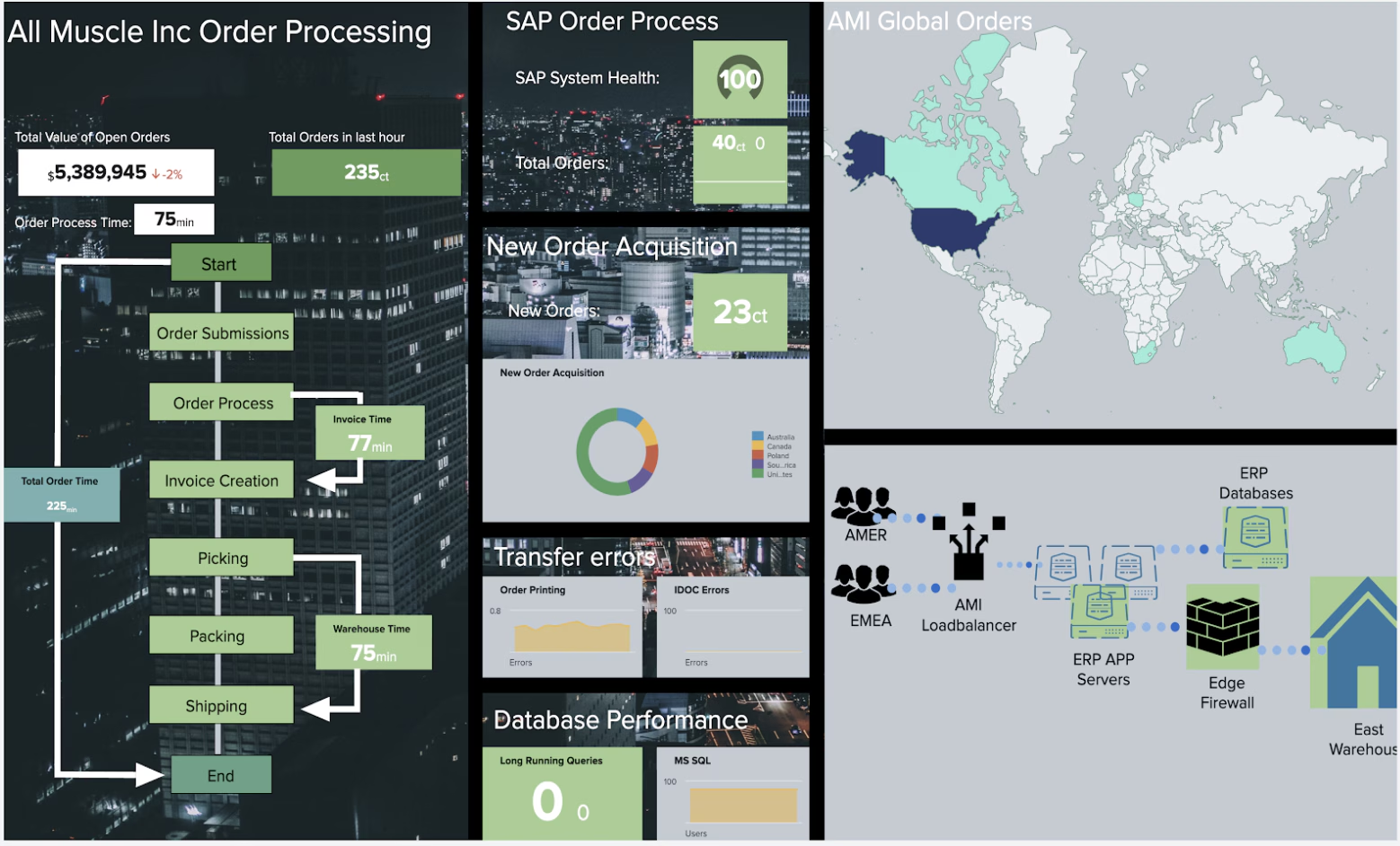
Spring Has Sprung! And So Has Our New SAP Offering!
New Splunk Synthetic Monitoring Features Help Integrate Uptime and Performance Across the Entire Splunk Platform
Start Your Engines, Data Drivers
How Splunk Is Parsing Machine Logs With Machine Learning On NVIDIA’s Triton and Morpheus
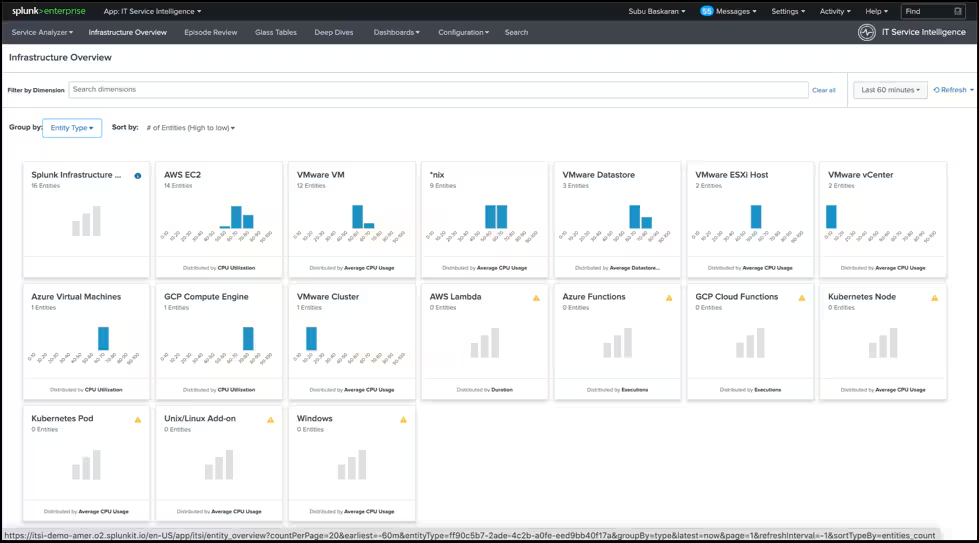
Splunk IT Essentials Work: A Centralized App for All Things ITOps
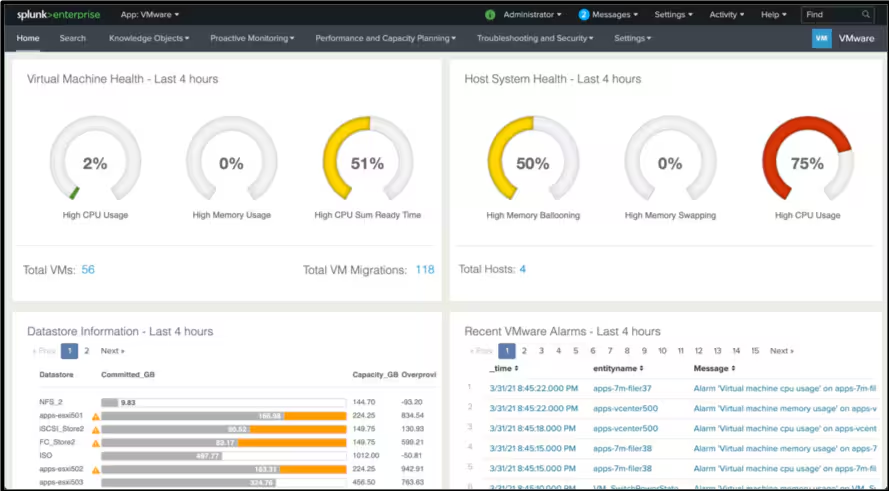
Monitor and Troubleshoot VMware Infrastructure with Splunk
Splunk Developer Spring 2021 Update

Getting Started with OpenTelemetry Python v1.0.0