Data Fabric Architecture: Benefits, Best Practices & Trends
With today's focus on artificial intelligence models and data quality, businesses are looking for a more unified approach to data management.
Enter data fabric, a data architecture that streamlines data management in the cloud environment. Data fabric is also expected to have a growth rate of 21.2% till 2030.
In this article, we'll explore what exactly data fabric is and delve into its benefits in the cloud context. We'll also discuss how you can implement data fabric in your organization and look ahead at future trends in this exciting field.
What is data fabric?
Data fabric is an architecture approach designed to provide rapid, consistent, and integrated access to data across a distributed data landscape. It enables seamless data access and processing across various platforms, from traditional databases to cloud storage services.
This comprehensive approach significantly improves data accessibility and reliability, making it easier for organizations to make informed decisions based on their data.By offering a comprehensive solution for data integration and management, data fabric streamlines processes and enhances collaboration within organizations.
Components of data fabric
To help you better understand how data fabric can improve data accessibility and reliability, let's explore its several key components. If a data fabric does not have these capabilities, you might question if it is, indeed, what you’re expecting it to be.
- Data integration and orchestration seamlessly brings together data from diverse sources, ensuring smooth transfer and synchronization.
- Metadata management and governance maintains comprehensive metadata for effective organization, discovery, and compliance.
- The unified access and storage layer provides a single interface for accessing various types of data stored in different locations.
- Data security and privacy are the robust security measures and privacy controls that ensure your data is protected and complies with relevant regulations.
- Real-time analytics and reporting enables immediate insights from data through real-time analytics and comprehensive reporting features.
They work together to streamline data integration, enhance metadata management and governance, and provide a unified access and storage layer.
With these key components at its core, data fabric revolutionizes how businesses handle their ever-growing volumes of information.
The benefits of data fabric in cloud environments
Data fabric in the cloud environment offers numerous benefits that can revolutionize data management. Here are some known benefits you might experience when you adopt data fabric as your go-to solution for data management:
Better data accessibility
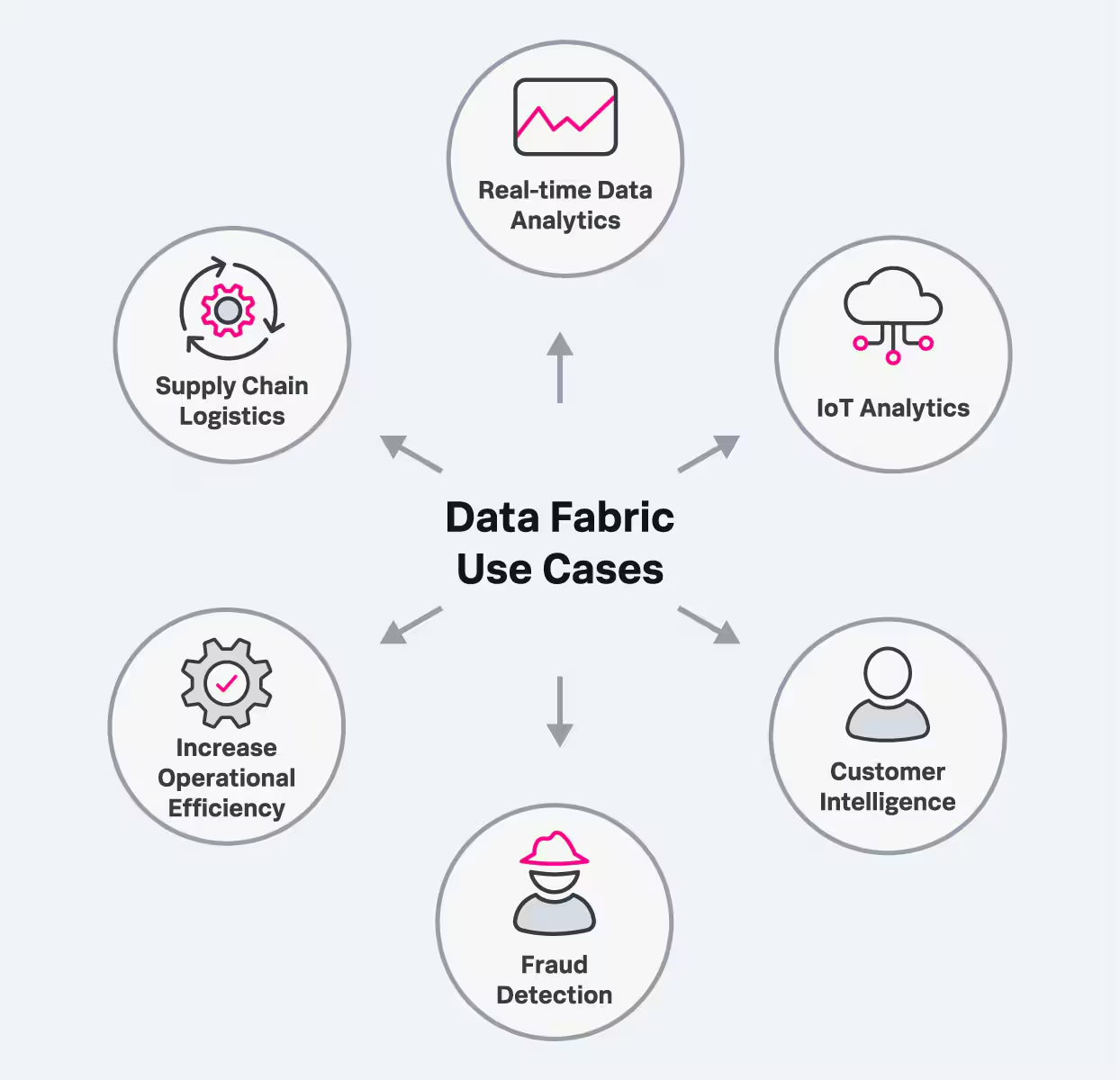
Real-time data access is a key feature of data fabric, allowing users to retrieve and analyze up-to-the-minute information. With a centralized data catalog, organizations can easily locate and access relevant datasets from various sources.
Self-service data provisioning empowers users to obtain the specific datasets they need without relying on IT support. These improvements in data accessibility enhance efficiency and decision-making capabilities for businesses operating in the cloud environment.
Smoother data integration
Seamless integration of diverse data sources enables organizations to harness the full potential of their data. Through the consolidation and connection of different types of data, businesses can gain valuable insights and make informed decisions.
Automated data mapping and transformation further streamline this process by eliminating manual efforts and reducing errors. This ensures that the right information is readily available for data analysis and decision-making.
Alongside these capabilities, robust data governance and security controls are essential to protect sensitive information while maintaining compliance with regulations. These measures establish trust in the accuracy, reliability, and confidentiality of integrated data, facilitating confident decision-making within a secure environment.
Efficient data processing
Next, in-memory processing in a data fabric solution enables faster analysis by storing data directly in memory, eliminating the need for disk I/O and reducing latency. This allows for real-time decision-making and quicker response times to queries.
Additionally, parallel processing capabilities enable simultaneous execution of multiple tasks, improving overall efficiency and reducing processing time.
Organizations can also enhance their data processing workflows by optimizing resource utilization through techniques like data partitioning and workload balancing. This helps maximize computing power while minimizing resource wastage, leading to more efficient operations.
Scalability & flexibility
The scalability of data fabric enables seamless handling of growing datasets, ensuring optimal performance and resource utilization.
With support for multi-cloud environments, data fabric empowers organizations to leverage multiple cloud providers, facilitating flexibility and avoiding vendor lock-in.
Dynamic workload management optimizes resource allocation and prioritization, enabling efficient processing of workloads in real time. These capabilities make data fabric a powerful solution for achieving scalability and flexibility in managing data in the cloud environment.
How to get started with data fabric
Data fabric implementation requires careful consideration of the right solution and architecture. Designing a robust data fabric architecture ensures seamless integration of multiple data sources, allowing for easy access and analysis. Additionally, implementing strong security measures is crucial to safeguard sensitive information in the cloud environment.
Let’s look at the steps to take when getting starting with data fabric in your org.
Choosing the right data fabric solution — for you
When choosing the right data fabric solution, it is important to thoroughly evaluate vendors and their offerings. Consider factors such as:
- Reputation
- Experience in the industry
- Customer reviews
- Scalability and performance requirements
- Compatibility with existing infrastructure
Solutions such as those from Oracle, IBM or Informatica, among many others, enable businesses to create data pipelines and automate data processing, enabling faster time for actionable insights.
Designing a data fabric architecture
Designing a data fabric architecture involves defining key integration points and workflows to ensure seamless data flow across systems. Here are some key points to consider:
- Consider the volume and diversity of data to be managed, as this will influence the architectural design.
- Ensure the architecture supports real-time data processing and analytics capabilities.
- Incorporate robust security measures into the architecture design to protect data privacy and integrity.
- Design the architecture to be scalable and flexible to accommodate growth and changes in data sources, volumes, and business requirements.
- Ensure the architecture supports unified access and storage, making it easy to access and analyze data from various sources.
- Include provisions for efficient data processing, such as in-memory processing and parallel processing capabilities.
- Support self-service data provisioning with the architecture, empowering users to obtain the specific datasets they need without relying on IT support.
- Consider the use of multi-cloud environments for added flexibility and to avoid vendor lock-in.
A well-designed data fabric architecture begins with a deep understanding of integration points and workflows within an organization's infrastructure. This includes identifying the storage, processing, and analytics components necessary for efficient data management. This will help optimize data flows and improve overall efficiency.
Additionally, it is crucial to plan for future expansion and flexibility by considering the scalability and adaptability of the architecture.
Integrating data sources
Identifying relevant data sources is also crucial for a successful integration into the fabric, ensuring comprehensive coverage. Establishing connectivity between different data systems enables seamless communication and enhances accessibility across the organization.
Securing data in the cloud
Implementing encryption mechanisms also helps to ensure the security of sensitive data both at rest and in transit within a cloud environment. Data encryption makes the data unintelligible to unauthorized individuals, thus reducing the risk of data breaches and theft.
Incorporating access controls further enhances data security by restricting unauthorized usage. This ensures that only authorized personnel can access and manipulate the sensitive information stored in the cloud.
Monitoring security through robust auditing tools also provides real-time visibility into potential vulnerabilities or suspicious activities. This enables prompt action to mitigate risks and maintain data integrity in the cloud environment.
Future trends in data fabric
The potential of data fabric is vast and continues to evolve with the increasing adoption of cloud computing. Here are some trends to expect in data fabric…
Artificial intelligence & machine learning integration
AI and machine learning (ML) integration will completely change the way organizations think about and handle data.
By incorporating AI and ML algorithms into data fabric technologies, businesses can benefit from enhanced predictive analytics capabilities, automated data processing and analysis, and real-time decision-making. This integration enables faster insights, improved accuracy in predictions, and increased efficiency in managing large volumes of data.
- Enhanced predictive analytics capabilities allow businesses to make more accurate forecasts based on historical patterns and trends.
- Automated data processing and analysis streamline the handling of vast amounts of information, reducing manual effort while ensuring accuracy.
- Real-time decision-making empowers organizations to respond quickly to changing circumstances by leveraging AI-driven insights for immediate action.
This helps data fabric provide businesses with a comprehensive overview of their data, which can glean valuable insights and inform strategic decisions.
Expansion of edge computing
Reduced latency, improved scalability and increased security are key benefits driving the expansion of edge computing. By bringing data-intensive applications closer to end-users, latency is minimized, and real-time processing becomes feasible.
The distributed nature of edge computing also enables enhanced scalability and performance at the network edge, ensuring seamless operations even during peak usage periods.
With these advantages, organizations can harness the full potential of edge computing through edge data fabric to optimize their digital infrastructure for a wide range of use cases.
Automated data governance
Data governance is one of the functions of the data fabric and is becoming increasingly important as organizations seek to maintain data integrity, accuracy, and security. Automation of data governance processes can help ensure compliance with regulations and industry standards while providing a comprehensive overview of the organization's data landscape.
Final thoughts
We can say that the role of data fabric in modern businesses can be a very important one. It is also continuously expanding, with advancements in AI, machine learning, edge computing, and automated data governance shaping its evolution.
Its benefits of providing better data accessibility, integration, and processing are also some reasons behind its growth. Through proper implementation, a data fabric architecture can boost the overall data quality in your organization.
FAQs about Data Fabric Architecture
Related Articles

What Is Distributed Tracing?

What Is InfoSec? Information Security Explained

What Is Risk Assessment? Steps, Types, and Challenges

Cloud Monitoring: What It Is & How It Works

What Is Network Intelligence?

Open Neural Network Exchange (ONNX) Explained

DevOps Conferences & Events 2026: Complete Guide

Risk Remediation Explained: Remediating Risk for Cybersecurity