Splunk AI Assistant for SPL 1.4 Brings Improved Accuracy and Optimization Via the Power of Agentic AI
We’re excited to announce that our latest release of the Splunk AI Assistant for SPL 1.4 is now available. This release features some key updates to help our users tackle complex tasks and use cases including a new streamlined UI, generating optimized SPL, and additional large language model options.
Agentic AI Framework To Deliver More Accuracy
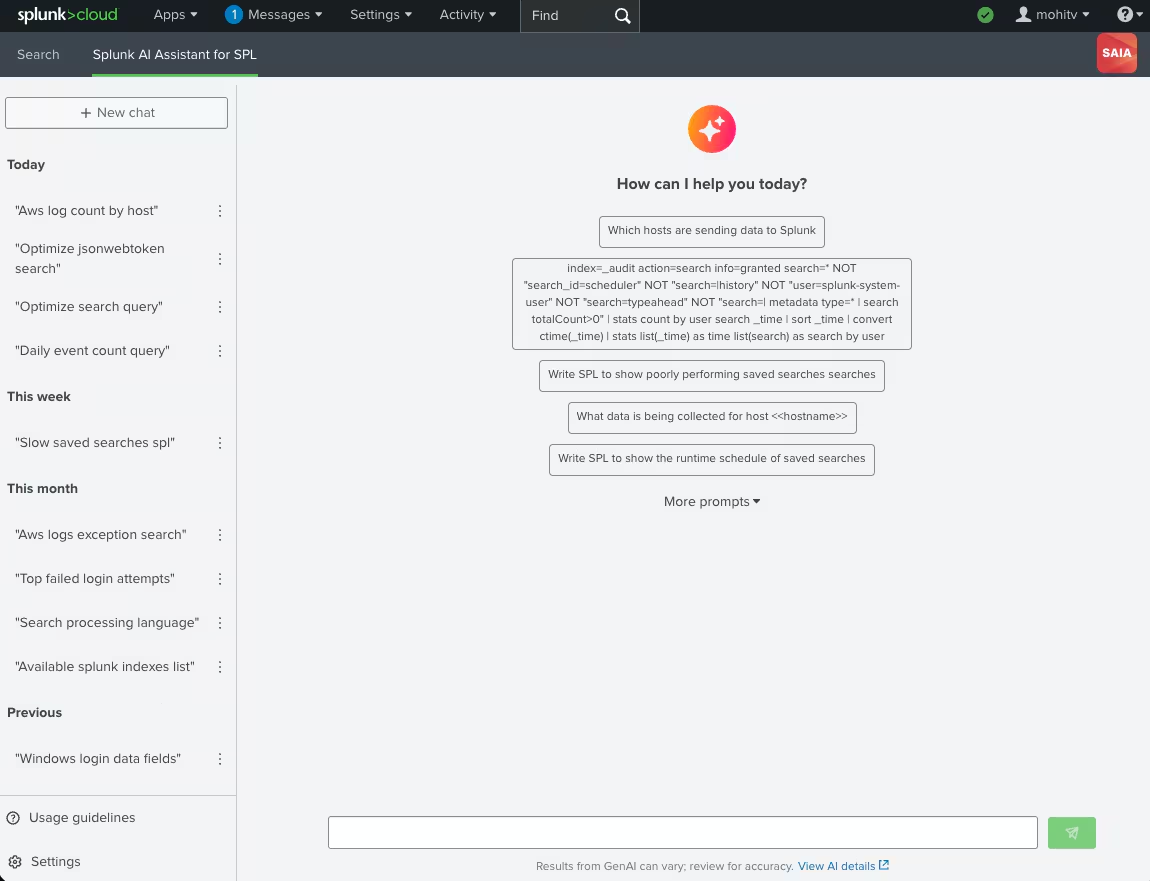
Tabs are no more! With the release of AI Assistant 1.4, we’ve unified all the AI capabilities into a single chat window. Now, users can mix and match skills as needed. AI Assistant also shows the steps it performs to generate a response, providing users with greater transparency and explainability into how a response was reached. If a prompt is unclear, rather than make guesses, AI Assistant will now ask users for clarifying questions to provide more accurate and detailed responses.
Generating Optimized Spl for Efficient Searches
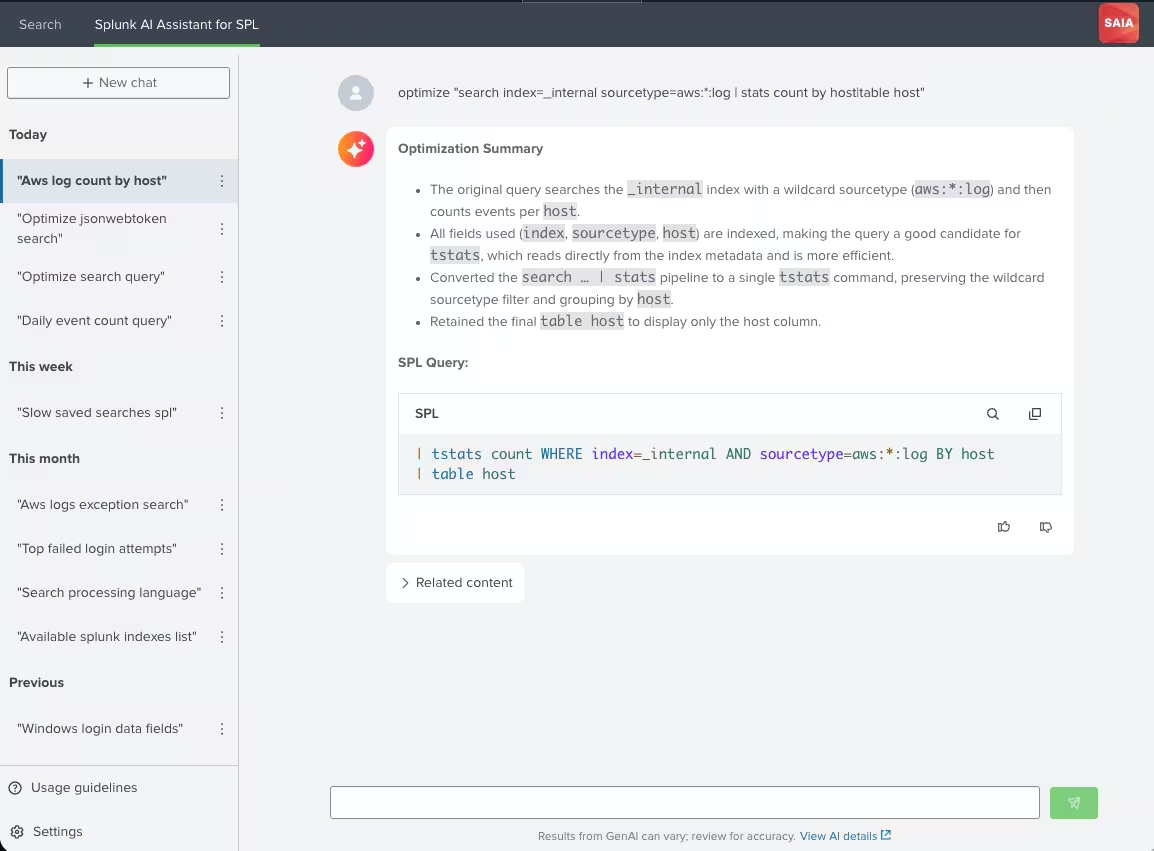
This release also introduces the optimize SPL skill. This new skill can examine a prompt entered by the user and then optimize it for faster performance that also uses fewer resources. Our testing found that searches using optimize SPL were not only 8 seconds faster on average, but 66% of those searches were improved (compared to 50% with other models) and 75% of optimized searches had similar results to original searches (compared to 66% with other models) based on internal benchmarks on a reference Splunk environment.
Support of Additional LLM
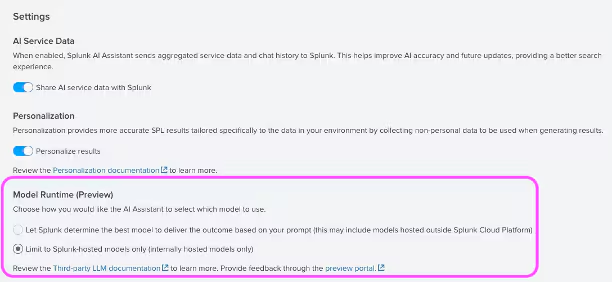
AI Assistant can now leverage Azure OpenAI models. While our Splunk-hosted LLM is purpose-built for Splunk use-cases, the addition of Azure OpenAI provides users with an additional larger general purpose foundation model that has more general knowledge about the world. Both models leverage the core innovation retrieval-augmented generation (RAG) with core Splunk knowledge to provide users with more context-aware results that are relevant to your organization’s needs and use cases.
Powered by Agentic AI
AI Assistant 1.4 also marks an important milestone, as we introduce the first of many planned agentic features. What do we mean by agentic? There’s a good chance that you’ve heard of or read the term “agentic AI” recently. As AI-driven skills and capabilities in various products continue to advance and enhance the way we work, agentic AI has been at the forefront of a lot of the conversation. So, what exactly is it?
Agentic AI refers to artificial intelligence systems that can pursue goals, make decisions, and take actions without the need for continuous human guidance and input, distinguishing them from traditional human-managed AI tools. Agentic AI is also able to break down complex tasks into sub-tasks, choose which internal tools or models to use, and orchestrate the process to deliver results. Instead of performing simple retrieval or single shot response tasks, agentic Ai is able to perform reasoning and decision-making.
Another way to look at agentic AI is that it thinks with you, not for you. As we implement agentic AI into Splunk AI Assistant, we want to emphasize that there is still very much a human-in-the-loop approach to how these skills work and function. For example, something like SPL generation does not execute the search without human consent.
For AI Assistant 1.4, here’s a quick breakdown of how we’re implementing some key agentic features in this release.
1. Intent Understanding & Orchestration
- AI Assistant now automatically classifies user input (“write SPL,” “explain,” “optimize,” and “tell me about”) without user selection.
- It selects and orchestrates tools to fulfill the user’s intent, rather than requiring manual user choice.
2. Tool Calling & Multi-step Reasoning
-
Splunk AI Assistant for SPL breaks down a prompt and calls multiple tools as needed (retrieval, SPL generation, reference lookup).
-
For example, to “write SPL,” AI Assistant may:
- Fetch relevant index, source types and field names through personalization
- Retrieve relevant past searches
- Generate and validate SPL queries
- Retry or regenerate if validation fails
3. Intermediate Decision Steps
- AI Assistant 1.4 tracks which step it’s on (tool selection, generation, validation) and can provide intermediate outputs or reasoning steps.
- This means users can see what tools were called and what reasoning occurred, improving overall transparency.
4. Multiple Models in Play
- AI Assistant leverages multiple AI models for the best outcomes. In future releases, we will also add new foundation models purpose-built for machine data.
This release marks the next step in our ongoing journey to empower our users with the transformative power of AI. If you haven’t already, download AI Assistant and give it a try. Be sure to also check out the full release notes for AI ASSISTANT 1.4 as well.