Splunk Edge Hub: Physical Data, Sensing and Monitoring on the Edge
Splunk Edge Hub device is a multi-component solution that includes a hardware device coupled with the Splunk platform and solutions that our partners build on top of both. It is a powerful tool that can help collect, distribute and act on data from edge devices and sensors, making it easier to capture and act on data that can be difficult to access physically or digitally. In this article I will discuss a few use-cases with external sensors as well as the out of the box sensors shipped with the Edge Hub device. The Splunk Edge Hub device’s screen lets you observe sensor data in-person, in the Splunk Mobile and AR apps, as well as on the Splunk platform.
Splunk Edge Hub is able to gather data from a variety of sources including:
-
Built-In Sensors: Temperature, Light, Humidity, Sound, Pressure, Gas, Gyroscopic, Acceleration.
-
- MQTT: An internal MQTT Broker enables data collection from a variety of IoT sensors.
- SNMP: Monitor and poll current and legacy hardware such as power distribution units.
- MODBUS: Communicate using the Modbus TCP protocol with sensors and devices.
- OPC UA: Collect metrics from hardware using the OPC Unified Architecture protocol.
-
Connectivity: The Edge Hub device has connectivity options including ethernet, WiFi, Bluetooth and LTE connectivity.
Monitoring Critical Infrastructure: Keeping the Lights On
I was able to bring an Edge Hub device to the Black Rock Desert to monitor critical systems of support infrastructure of an art installation. I believe it was a great opportunity to see how the Edge Hub device’s environmentally resistant enclosure would hold up. The environmental conditions are generally hot and dusty. The normal environmental conditions can stress even the most robust equipment and infrastructure. I was not expecting to test how well the device’s shelter held up in a rainstorm. In hindsight a water leak detection sensor could have been useful too! The Edge Hub device was valuable in monitoring and observing support infrastructure and providing data to derive insights in the future using Splunk platform or processed for additional analysis.
My goals in the use of the Edge Hub and Splunk Enterprise server installation were to integrate with an energy meter which emits MQTT messages, and to gather data from the out of the box sensors. I was able to get all of the monitoring equipment and sensors set up as expected in the lab but did run into a few unexpected issues in the field, due to networking equipment. This didn't stop me from gathering a lot of other interesting data from the Edge Hub device.
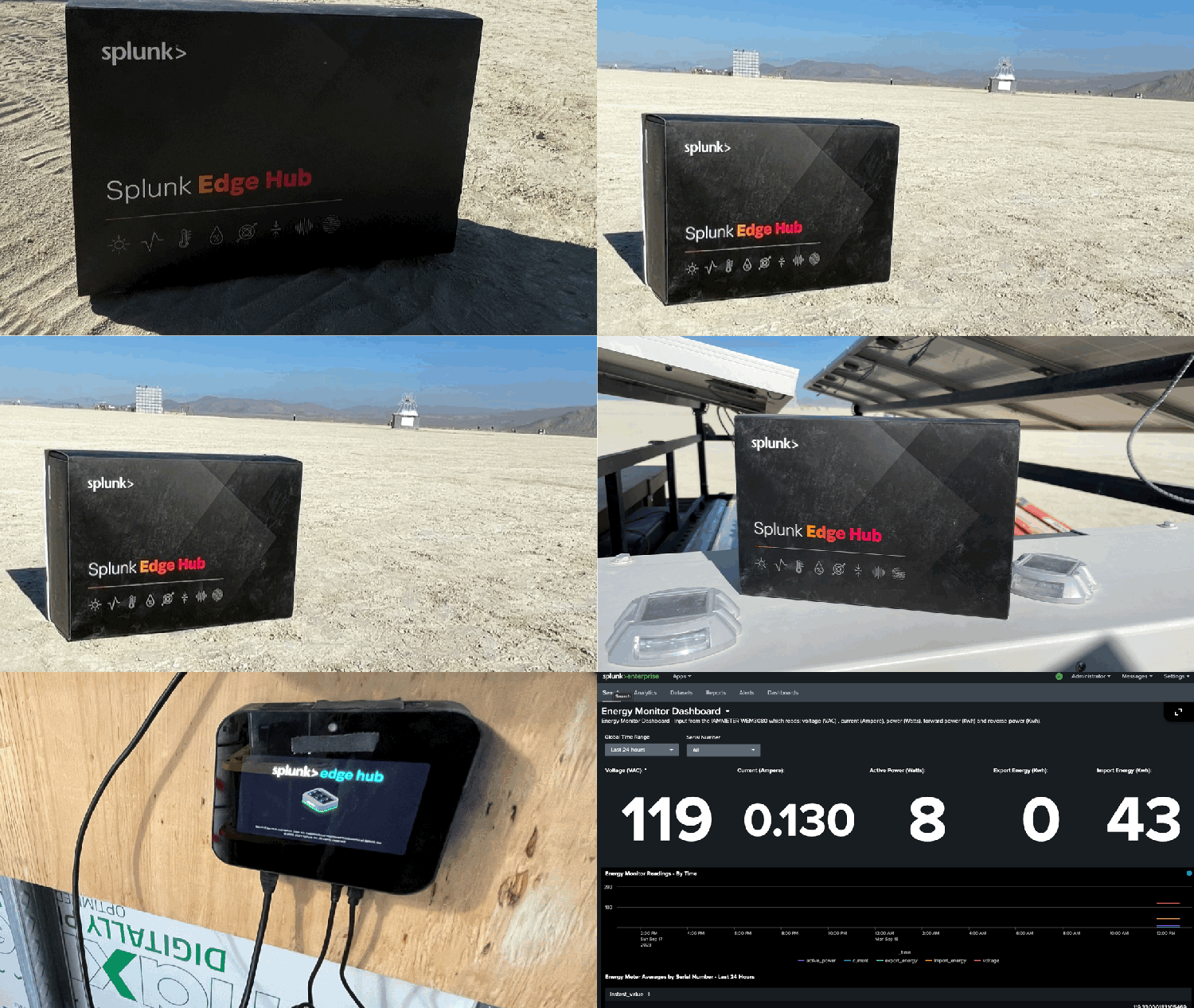
Monitoring Critical Infrastructure: Illumination
The Splunk Edge Hub device monitored critical infrastructure equipment for an off-grid art museum building which illuminated its galleries from sunset to sunrise. This was important for both the usability of the galleries at night, as well as to ensure no passing vehicles accidentally bump into it during a time of low visibility. It was great to have confidence that there would be enough power reserves in the battery banks to power lights all night. If there was a cloudy or dusty day and production was low we could plan to use additional fuel for back-up generators if utilized.
The project was able to run on solar power successfully with a bit of maintenance to keep things clean. Edge Hub kept on going throughout the week even with dust, heat and moisture in the air.
The device’s built-in and external sensors it let us know:
- Are We Cool: Can equipment function without overheating or limiting battery capacity? We could cool those concerns with the knowledge that we could monitor temperature and humidity to validate operation within expected parameters.
- Under Pressure: Integrating data from the internal pressure sensor helped to let us know if an equipment enclosure was maintaining a positive or negative pressure. With a filtered air input, positive pressure helps to keep out dust and preserve equipment life.
- Humidity: Monitoring the moisture content in the air to help ensure that equipment is operating in optimal conditions.
- Illumination Check: To verify lights and power were on or off for the museum galleries ensuring it was visible to passing pedestrians, bicycles and vehicles.
- Energy Output: Optional external sensors sending MQTT messages for monitoring the solar generator exporting power as needed through the night and importing energy to charge from solar panels during the day.
- Power State: Were solar panels generating enough sun? Was there a possibility of reduced output due to dust? Did low batteries cause the back-up generator to kick in? Validation of each system's state lets us know what is sitting idle, running smoothly, or possibly getting low on fuel.
Monitoring Critical Infrastructure: Do I Have the Power?
The device collected data through the heat of the day, dust storms and rain storms. When there was no Splunk Enterprise server to connect to the Edge Hub device, it was able to successfully backfill data when the Splunk Enterprise server was online again. The device survived the burning hot sun, dust everywhere and rain showering down all around. I was interested in making sure that sensitive equipment stayed dust free, dry and functional. The infrastructure building was successful in keeping the temperature low enough for our batteries to charge. High temperatures can cause the solar generators batteries to stop charging efficiently, so keeping an eye on it was important. The Edge Hub device’s sensor data was easily available to view on the screen so we could validate the temperature, humidity and pressure and external sensors. As the weather changed from hot and dusty to rain with the Edge Hub device recorded sensor data and events for us. This data will help in forecasting future energy needs for similarly sized projects.
Monitoring energy generation of critical support infrastructure was important for a number of reasons, including it being off-grid as well as:
- Optimizing solar energy usage: Tracking solar usage consumption and production can help to validate if your energy needs are being met by your solar panels.
- Peak Performance: Monitoring solar energy output over time allows one to quickly identify problems affecting their performance.
- Identifying Potential Problems: Monitoring solar output over time can help you troubleshoot issues, such as a dusty solar panel lowering output.
- Cost Savings: Monitoring allows one to calculate how much money was saved versus other methods of energy generation. Take action with insights
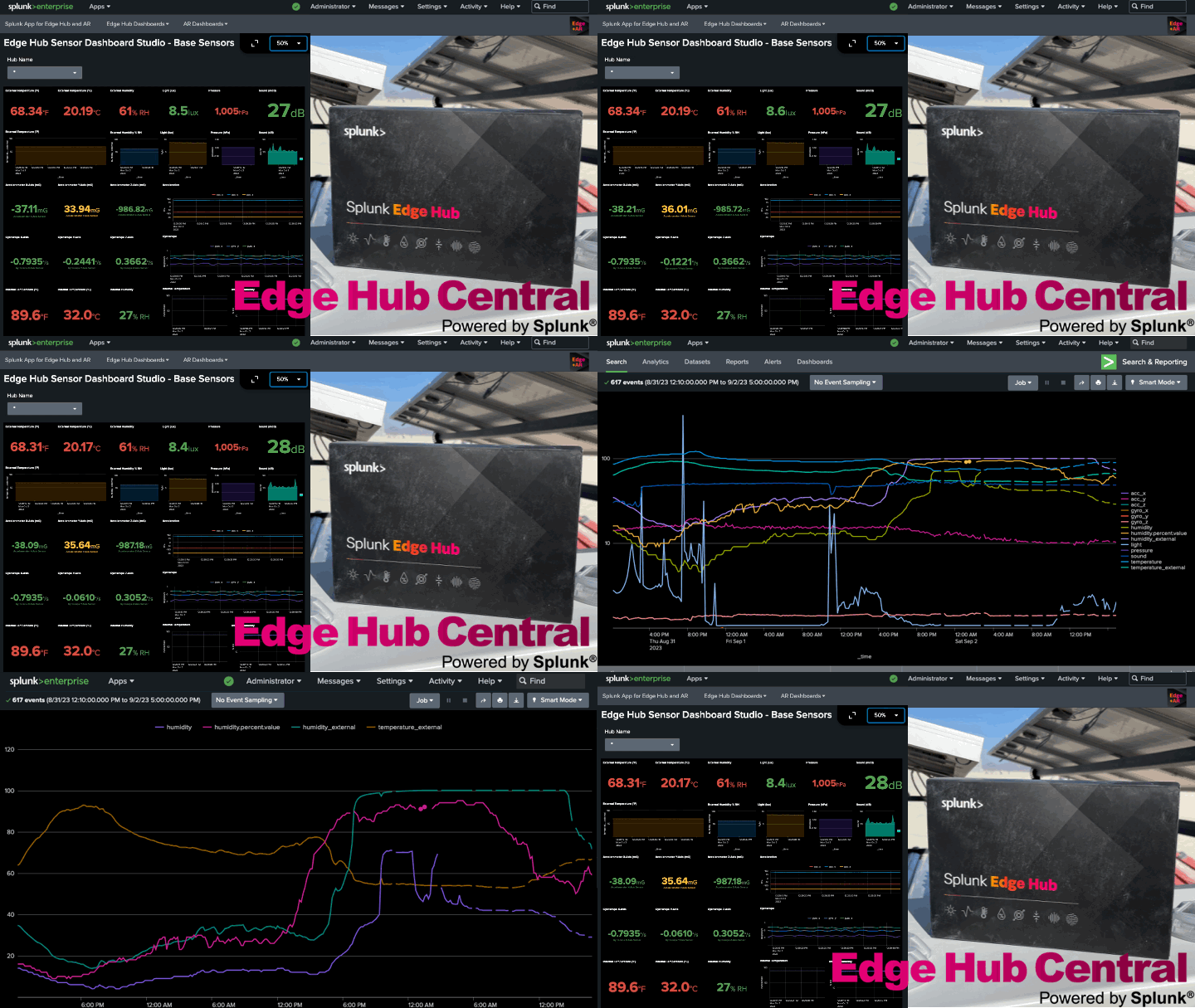
Having more data can help you derive insights; using the Splunk platform makes it easily attainable to utilize more of your data. These insights can help you in getting the most out of your infrastructure, processes, or services. In turn it also can lead to increased visibility and observability of systems and processes. The Splunk platform helps in establishing a historical record, and Splunk Edge Hub solution provides a repeatable methodology for capturing data from sensors.
Sensor data can help one’s organization take action on insights, the Splunk Edge Hub and Splunk platform can help you:
- Add Value: Sensor data can be used in observing the status of processes, systems, network equipment and more. The Splunk platform can help in the identification of anomalous sensor data, developing baselines for establishing alert thresholds, key performance indicators and further automation to control those systems.
- Identify Risk or Anomalies: Sensor data can help identify and assess risks to an organizations systems and processes, allowing mitigation to take place earlier such as preventative maintenance.
- Observe and Take Action: Use sensor data to monitor the quality of products, services and infrastructure. Ensure processes are maintaining the proper temperature, pressure or vibration meet expected standards.
- Predictive Maintenance: Integration of sensor data from machines and equipment can be used to help predict when a failure may occur. Taking action early can help prevent down-time, save money and extend the life of equipment. If you would like to get a sense of your sensor signals, take action and explore solutions our partners provide!
Next Steps
Splunk Edge Hub is sold exclusively through Edge Hub Central; to learn more about this and to explore solutions that partners can create using Splunk Edge Hub, visit edgehubcentral.com today. Splunk Edge Hub is currently offered on Early Access.
This blog post was authored by Adam Schalock, Observability Solutions Innovation Engineer at Splunk. This content was updated October 2024.
Related Articles

Unlocking New Possibilities: Splunk and AWS Better Together

Executive Q&A: Accelerating AI Success with Splunk and AWS

Accelerate Operations with AI: New Splunk and AWS Integrations

Introducing Splunk Victoria Experience on Google Cloud: Faster, Clearer, More Resilient

Splunk Cloud Platform: Accelerating Digital Resilience for the Agentic AI Era in Kingdom of Saudi Arabia with Google Cloud

How Splunk and Dataminr Work Together to Help Accelerate Resilience

Splunk Named 2025 Americas Partner of the Year Finalist by Microsoft

Managed Enterprise Platform: Delivering Mission-Critical Observability with Splunk
